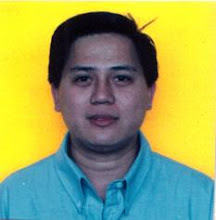
If you happen to have a $10 in your pocket, the individual in the portrait is no other than Alexander Hamilton. And for people who couldn’t care less, they might ask the most telling question of all, “so what?”
During the early stage of the British-American war, he served as a captain in an artillery company where he distinguished himself and caught the attention of General George Washington. Eventually, he became the most trusted secretary of the first American president. He served as the first Secretary of Treasury of the American Government, reconstructing and rebuilding continental America from the ruins brought about by the above-mentioned war.
You would have to imagine that during the tenure of President George Washington, there were no precedents to speak of when it comes to governance, people were afraid of taxes and the very reason that there was war with Britain was because of its excessive taxes levied against the colony.
There were two contrasting views that serve as a demarcation line. It is either that one is for a stronger federal government or for a stronger republican (local) government.
When Alexander Hamilton assumed the position of Secretary of Treasury, he espoused a stronger federal government, calling for the establishment of a central bank and a coherent fiscal system, for the collection and payment of taxes, for the creation of customs, the creation of a navy and a standing army over the objections of the faction led by Thomas Jefferson and James Madison. Without precedence, he argued for the “implied” powers of government before the Supreme Court, winning a monumental brick for the establishment of what is America today. Undoubtedly, he is credited as the father of American government.
The dark side of this story is that he was killed in a duel with then American Vice-President Aaron Burr. He personally thwarted the ploy of Burr in becoming president and governor of New York and was inevitably challenged to a duel. The duel and death of Hamilton ruined the career of Burr, eventually leading to a conspiracy charge (an acquittal) of trying to establish a separate confederate state in the West allied with Spain.
Did I also mention that Alexander Hamilton was a foreigner? He was born in the colony of British West Indies and only migrated to continental America to pursue a degree. The shape of American history and government would have been different if it weren’t for this poor immigrant.
Sunday, June 1, 2008


Thursday, May 29, 2008
People Reduction Program by Ronan S. Estoque, DPA (January, 2008)
It is very noticeable that during the semestral and summer break, traffic in the metropolis is light. Students that seem to crowd the streets and malls are surprisingly absent - when there is an academic furlough this leads to a city traffic that is inevitably light and easier.
Whenever there is traffic or gridlock – time, manpower and opportunities are lost that are certain never to present themselves again. Like a cancer that is brought about by urbanization, traffic seems to be an inherent problem that is beyond a simplistic solution.
The government, in response the horrendous daily traffic brings, adopted numerous schemes so as to lessen, avoid and if possible, eradicate the curse of traffic. From the multi-billion projects of MRT to LRT, to the construction of “infrastructures” that was designed originally to decongest potential traffic gridlocks.
The government even went to the extent of establishing a government arm specifically tasked with controlling metro traffic. The Metro Manila Development Authority (MMDA), with its annual expenditures of another billion of pesos acts as a main traffic enforcer for the Metropolis.
From a color-coding scheme to an odd-even program to a unified vehicular reduction program, the social experimentation was meant to gather empirical data so as to ease metro traffic and have a semblance of reason in the management of number of vehicles using the road of the metropolis.
The weakness of an odd-even scheme is that even if there is a vehicular reduction, people (particularly students) would still need to commute from their place of residence to their schools. Yes, there is a reduction of vehicles on the road, but there are still students on the road using another mode of transportation and still causes another form of traffic and gridlock.
Crudely, what I have in mind is that instead of focusing on reducing vehicles on the road of metropolis, maybe a more efficient mode of reducing students on the road would be more effective in reducing traffic and gridlock.
Now how do we go about this?
We reduce the number of students on the road by having a school time that does not coincide with the usual time frame of the other sector of society. When employees are usually within the time frame of 8 AM to 5 PM/9 AM to 6 PM, maybe students could be on a 6 AM to 2 PM time frame where there are a lesser number of people on the road since majority of them are still at work.
This suggested arrangement reduces the number of people on the road where instead of adopting a vehicular reduction program, the government adopts a people reduction program. Lesser people on the road means lesser traffic…
This particular set-up is applicable only in Metro Manila since this is where traffic is very heavy. In the province, the status quo of schedule is sufficient to meet the current dictates and imperatives.
Whenever there is traffic or gridlock – time, manpower and opportunities are lost that are certain never to present themselves again. Like a cancer that is brought about by urbanization, traffic seems to be an inherent problem that is beyond a simplistic solution.
The government, in response the horrendous daily traffic brings, adopted numerous schemes so as to lessen, avoid and if possible, eradicate the curse of traffic. From the multi-billion projects of MRT to LRT, to the construction of “infrastructures” that was designed originally to decongest potential traffic gridlocks.
The government even went to the extent of establishing a government arm specifically tasked with controlling metro traffic. The Metro Manila Development Authority (MMDA), with its annual expenditures of another billion of pesos acts as a main traffic enforcer for the Metropolis.
From a color-coding scheme to an odd-even program to a unified vehicular reduction program, the social experimentation was meant to gather empirical data so as to ease metro traffic and have a semblance of reason in the management of number of vehicles using the road of the metropolis.
The weakness of an odd-even scheme is that even if there is a vehicular reduction, people (particularly students) would still need to commute from their place of residence to their schools. Yes, there is a reduction of vehicles on the road, but there are still students on the road using another mode of transportation and still causes another form of traffic and gridlock.
Crudely, what I have in mind is that instead of focusing on reducing vehicles on the road of metropolis, maybe a more efficient mode of reducing students on the road would be more effective in reducing traffic and gridlock.
Now how do we go about this?
We reduce the number of students on the road by having a school time that does not coincide with the usual time frame of the other sector of society. When employees are usually within the time frame of 8 AM to 5 PM/9 AM to 6 PM, maybe students could be on a 6 AM to 2 PM time frame where there are a lesser number of people on the road since majority of them are still at work.
This suggested arrangement reduces the number of people on the road where instead of adopting a vehicular reduction program, the government adopts a people reduction program. Lesser people on the road means lesser traffic…
This particular set-up is applicable only in Metro Manila since this is where traffic is very heavy. In the province, the status quo of schedule is sufficient to meet the current dictates and imperatives.
The Formal and Informal Nature of Logic by Rogelio G. Dela Cruz, Ph. D (January, 2008)
Logic is the study of the principles and criteria of valid inference and demonstration. Logic arose from a concern with correctness of argumentation. The conception of logic as the study of argument is historically fundamental, and was how the founders of distinct traditions of logic, namely Plato and Aristotle, conceived of logic. As a formal science, logic investigates and classifies the structure of statements and arguments, both through the study of formal systems of inference and through the study of arguments in natural language. The field of logic ranges from core topics such as the study of fallacies and paradoxes, to specialized analysis of reasoning using probability and to arguments involving causality. Logic is also commonly used today in argumentation theory.
Traditionally, logic is studied as a branch of philosophy, one part of the classical trivium, which consisted of grammar, logic, and rhetoric. Since the mid-nineteenth century formal logic has been studied in the context of foundations of mathematics, where it was often called symbolic logic.
In 1903 Alfred North Whitehead and Bertrand Russell attempted to establish logic formally as the cornerstone of mathematics with the publication of Principia Mathematica. However, the system of Principia is no longer much used, having been largely supplanted by set theory. As the study of formal logic expanded, research no longer focused solely on foundational issues and the study of several resulting areas of mathematics came to be called mathematical logic. The development of formal logic and its implementation in computing machinery is the foundation of computer science.
Form is central to logic. It complicates exposition that form in formal logic is commonly used in an ambiguous manner. Symbolic language is just one kind of formal logic, and is distinguished from another kind of formal logic, traditional Aristotelian syllogistic logic, which deals solely with categorical propositions. On the other hand, informal logic is the study of natural language arguments. The study of fallacies is an especially important branch of informal logic wherein the dialogues of Plato are a major example.
Furthermore, formal logic is the study of inference with purely formal content, where that content is made explicit. Formal logic is often used as a synonym for symbolic logic, where informal logic is then understood to mean any logical investigation that does not involve symbolic abstraction; it is this sense of 'formal' that is parallel to the received usage coming from formal languages or formal theory. In the broader sense, however, formal logic is old, dating back more than two millennia, while symbolic logic is comparatively new, only about a century old.
Traditionally, logic is studied as a branch of philosophy, one part of the classical trivium, which consisted of grammar, logic, and rhetoric. Since the mid-nineteenth century formal logic has been studied in the context of foundations of mathematics, where it was often called symbolic logic.
In 1903 Alfred North Whitehead and Bertrand Russell attempted to establish logic formally as the cornerstone of mathematics with the publication of Principia Mathematica. However, the system of Principia is no longer much used, having been largely supplanted by set theory. As the study of formal logic expanded, research no longer focused solely on foundational issues and the study of several resulting areas of mathematics came to be called mathematical logic. The development of formal logic and its implementation in computing machinery is the foundation of computer science.
Form is central to logic. It complicates exposition that form in formal logic is commonly used in an ambiguous manner. Symbolic language is just one kind of formal logic, and is distinguished from another kind of formal logic, traditional Aristotelian syllogistic logic, which deals solely with categorical propositions. On the other hand, informal logic is the study of natural language arguments. The study of fallacies is an especially important branch of informal logic wherein the dialogues of Plato are a major example.
Furthermore, formal logic is the study of inference with purely formal content, where that content is made explicit. Formal logic is often used as a synonym for symbolic logic, where informal logic is then understood to mean any logical investigation that does not involve symbolic abstraction; it is this sense of 'formal' that is parallel to the received usage coming from formal languages or formal theory. In the broader sense, however, formal logic is old, dating back more than two millennia, while symbolic logic is comparatively new, only about a century old.
Sigmund Freud (1856 - 1959) by Ronan S. Estoque, DPA (January, 2008)
The most telling contribution of Dr. Sigmund Freud is the formulation of the psychoanalytic theory. The “unconscious” became the operative word in psychology in the 1940’s and 1950’s.
Accordingly, explaining human behavior, predicting human behavior, and manipulating human behavior became embedded with the unconscious mind. Dr. Freud became what Michael Jordan was in the field of basketball. He became the superstar of the psychology in his time.
The framework for explaining neurosis became plain and simple. Thinking about sex became normal and every psychological problem can be resolved by confronting and embracing human sexuality instead of the usual repression (in whatever form) method advocated by moral police of his era. Dr. Freud also identified and explained disparate manifestations of defense mechanisms, namely:
Identification. The unconscious process that protects the subject from anxiety by adopting traits from a psychological model.
Displacement. The unconscious transfer of an emotion from its original object to something or someone else.
Projection. The unconscious process that attributes other people’s feelings (i.e aggression) which one does entertain himself.
Regression. Retreating to a more immature pattern of behavior.
Repression. Keeping one’s memories and wishes in the unconscious.
Sublimation. Finding a socially acceptable outlet for a morally unacceptable impulse (i.e desire for one’s mother).
Denial. Refusing to accept something that is true.
Rationalization. Justifying irrational behavior or giving/offering excuses to one’s shortcomings.
Reaction formation. Behaving opposite to what one feels. More than anything else, he became the creative architect behind the rest of the personality theorists after him. Majority of them borrowed from his framework minus the overemphasis on sex as a platform for explaining human behavior.
References
Estoque, Ronan S, Dela Cruz, Rogelio G, & Pichay, Marinelle Ivy T (2006), College Psychology, Mindshapers Inc., Philippines.
Oxford Interactive Encyclopedia 2000. Oxford University Press (2000)
Accordingly, explaining human behavior, predicting human behavior, and manipulating human behavior became embedded with the unconscious mind. Dr. Freud became what Michael Jordan was in the field of basketball. He became the superstar of the psychology in his time.
The framework for explaining neurosis became plain and simple. Thinking about sex became normal and every psychological problem can be resolved by confronting and embracing human sexuality instead of the usual repression (in whatever form) method advocated by moral police of his era. Dr. Freud also identified and explained disparate manifestations of defense mechanisms, namely:
Identification. The unconscious process that protects the subject from anxiety by adopting traits from a psychological model.
Displacement. The unconscious transfer of an emotion from its original object to something or someone else.
Projection. The unconscious process that attributes other people’s feelings (i.e aggression) which one does entertain himself.
Regression. Retreating to a more immature pattern of behavior.
Repression. Keeping one’s memories and wishes in the unconscious.
Sublimation. Finding a socially acceptable outlet for a morally unacceptable impulse (i.e desire for one’s mother).
Denial. Refusing to accept something that is true.
Rationalization. Justifying irrational behavior or giving/offering excuses to one’s shortcomings.
Reaction formation. Behaving opposite to what one feels. More than anything else, he became the creative architect behind the rest of the personality theorists after him. Majority of them borrowed from his framework minus the overemphasis on sex as a platform for explaining human behavior.
References
Estoque, Ronan S, Dela Cruz, Rogelio G, & Pichay, Marinelle Ivy T (2006), College Psychology, Mindshapers Inc., Philippines.
Oxford Interactive Encyclopedia 2000. Oxford University Press (2000)
From Plow to Ballpen to Diaper by Claudio V. Tabotabo, MA (January, 2008)
Perhaps the clergyman who was also a teacher in the Philippines during the Spanish time had only one problem in the classroom. There were Spanish children but the natives were in farms helping their parents. The natives who were the core of the clergyman’s mission seemed to be far from school.
Life revolved around the farm, it was the orientation of the Filipino family. It was not that Filipinos did not love to learn the rudiments of the Catholic faith. They only found the farm the direct answer of their economic problems. Or the Filipinos did notice other areas of the academe more particularly the subject on self-governance Or Filipinos did not like the “Informal Education” which was the only type of education the Spaniards could give. So the Filipinos who were inferior in physical stature but smarter than their colonizers opted to stay in the farm and enjoy the day under the sun.
Thinking that Filipinos wanted something practical the Spaniards offered trade schools, and as reported established in 1863, but the number of indios going to school remained small.
The Americans came bringing the educational system that is anchored on Booker T. Washington’s proclamation of Vocational Education. Although Filipinos still considered farm labor a source of income, the Americans were not so much challenged by the Filipinos’ indifference to education. The number of natives going to school had considerably increased.
Filipinos began to see education as their avenue towards decent living. They found education the ax that will break the chain that bound them for centuries in the farm. Education for the Filipinos is a magic balm that will put them in alignment with their American masters. But what the Filipinos liked is education without manual labor. In 1925 the Monroe Commission reported a lament on the white-collar orientation of education.
Well it is not the purpose of this paper to analyze the educational system of the Americans in the Philippines. But there must be a paper that will say something about the Vocational Education brought by the Americans. Again it must be education that would direct the Filipinos towards self-governance, and not just to train as technicians, carpenters, welders or care-givers.
The Americans wanted to see the Filipinos as the best workers of the world, and indeed it is what the Filipinos are today. They are the best caregivers and the most fluent English-speaking maids in the Middle East.
There is nothing wrong for Filipinos working abroad. But they must not confine to it. Care giving alone could not govern a country.
Life revolved around the farm, it was the orientation of the Filipino family. It was not that Filipinos did not love to learn the rudiments of the Catholic faith. They only found the farm the direct answer of their economic problems. Or the Filipinos did notice other areas of the academe more particularly the subject on self-governance Or Filipinos did not like the “Informal Education” which was the only type of education the Spaniards could give. So the Filipinos who were inferior in physical stature but smarter than their colonizers opted to stay in the farm and enjoy the day under the sun.
Thinking that Filipinos wanted something practical the Spaniards offered trade schools, and as reported established in 1863, but the number of indios going to school remained small.
The Americans came bringing the educational system that is anchored on Booker T. Washington’s proclamation of Vocational Education. Although Filipinos still considered farm labor a source of income, the Americans were not so much challenged by the Filipinos’ indifference to education. The number of natives going to school had considerably increased.
Filipinos began to see education as their avenue towards decent living. They found education the ax that will break the chain that bound them for centuries in the farm. Education for the Filipinos is a magic balm that will put them in alignment with their American masters. But what the Filipinos liked is education without manual labor. In 1925 the Monroe Commission reported a lament on the white-collar orientation of education.
Well it is not the purpose of this paper to analyze the educational system of the Americans in the Philippines. But there must be a paper that will say something about the Vocational Education brought by the Americans. Again it must be education that would direct the Filipinos towards self-governance, and not just to train as technicians, carpenters, welders or care-givers.
The Americans wanted to see the Filipinos as the best workers of the world, and indeed it is what the Filipinos are today. They are the best caregivers and the most fluent English-speaking maids in the Middle East.
There is nothing wrong for Filipinos working abroad. But they must not confine to it. Care giving alone could not govern a country.
Salubrious Living by Claudio V. Tabotabo, MA (January, 2008)
Across the sea, south of the Philippines there is a patch of land the early people called “Menelangan”. The Subanun who lived a semi nomadic life around the place are bewildered by the beauty of the sun when it appears above the ridges of mountains. It became their land mark and when their fellow villagers asked them where they go, they said, “to the place where the sun is born”.
Menelangan means sunrise, but the early Visayan who migrated to Mindanao misheard the word to Sindangan. The Visayan did not bother themselves by checking the word. They immediately accepted and used the word. It was further solidified by the existence of a giant fish they called Indangan back to their island of birth, the Visayas. So the name was approved. The migrants in Mindanao latter carried the name Sindangan up to the present generation. The place had turned into a town with its life vested on the fertility of its land.
It is a place of tranquility, the artists’ chosen place to work; a place free from the madding crowd, far from the grating of machines, far from the saturnine look of drug addicts and hold up gangs, far from swindlers and far from the police men. The place is very kind to its people so that everyone is pleased with his assigned lot; there is more than enough what the family needs. And in that place of the world my father farms.
My boyhood experience in the place is always associated with the pulverized farms and the joyous faces of farmers during harvest time. In that place the morning announces its coming by the moaning of pigeons on the branches of the Santol tress surrounding our house, the endless murmur of the brooks as they joined to the wide Talinga River. And I could hear the shuffling of leaves that mingled with the tickling of spoons and plates from the kitchen which told me breakfast is ready.
I just could not explain why men had to leave the pastoral life to suffer in the urban centers. I also could not explain why civilization as men called it, always relates to the destruction of the Earth. The industrial revolution destroyed what God has created, and this technology that we have now is the descendant of that revolution. Technology hastens business but lessens the meaning of life.
Some experts put the solution of economic problem by making the country industrial. Though the Philippines remain in its pre-industrial period, it cannot be classified agricultural because the government has no plans and investment in agriculture. Even the Coco-Levi fund, the money that belonged to the farmers had gone into the some pockets of the government. The farmers suffer and they are branded ignorant and backward.
We must learn the lesson of the New Zealanders. Today they enjoy the life style of the Americans and Europeans yet they remain agricultural. We have the land and human resources; we only do not have the initiative to improve and develop what is indigenous because we always consider ours as inferior compare to something foreign.
Menelangan means sunrise, but the early Visayan who migrated to Mindanao misheard the word to Sindangan. The Visayan did not bother themselves by checking the word. They immediately accepted and used the word. It was further solidified by the existence of a giant fish they called Indangan back to their island of birth, the Visayas. So the name was approved. The migrants in Mindanao latter carried the name Sindangan up to the present generation. The place had turned into a town with its life vested on the fertility of its land.
It is a place of tranquility, the artists’ chosen place to work; a place free from the madding crowd, far from the grating of machines, far from the saturnine look of drug addicts and hold up gangs, far from swindlers and far from the police men. The place is very kind to its people so that everyone is pleased with his assigned lot; there is more than enough what the family needs. And in that place of the world my father farms.
My boyhood experience in the place is always associated with the pulverized farms and the joyous faces of farmers during harvest time. In that place the morning announces its coming by the moaning of pigeons on the branches of the Santol tress surrounding our house, the endless murmur of the brooks as they joined to the wide Talinga River. And I could hear the shuffling of leaves that mingled with the tickling of spoons and plates from the kitchen which told me breakfast is ready.
I just could not explain why men had to leave the pastoral life to suffer in the urban centers. I also could not explain why civilization as men called it, always relates to the destruction of the Earth. The industrial revolution destroyed what God has created, and this technology that we have now is the descendant of that revolution. Technology hastens business but lessens the meaning of life.
Some experts put the solution of economic problem by making the country industrial. Though the Philippines remain in its pre-industrial period, it cannot be classified agricultural because the government has no plans and investment in agriculture. Even the Coco-Levi fund, the money that belonged to the farmers had gone into the some pockets of the government. The farmers suffer and they are branded ignorant and backward.
We must learn the lesson of the New Zealanders. Today they enjoy the life style of the Americans and Europeans yet they remain agricultural. We have the land and human resources; we only do not have the initiative to improve and develop what is indigenous because we always consider ours as inferior compare to something foreign.
Obsessive-Compulsive Disorders by Ronan S. Estoque, DPA (January, 2008)
Obsession in Oxford Interactive Encyclopedia is defined as an idea/image that repeatedly intrudes on the mind of a person against his will. Compulsion on the other hand is an irresistible impulse to behave in a certain way. A combination of the two words denotes a fixated ritual where a deviation is difficult (if not impossible) for the subject experiencing the disorder.
Obsessive-compulsive disorder takes many forms, including excessive hand washing, fear of creating hazards for others, a need for order, anxiety over germs or contamination, repetitive checking of irons, ovens and door locks, and fear of harming others with knives or similar sharp objects.
The Most Common Expressions of OCD are:
Relationship Substantiation. A compulsive search for tiny but disqualifying flaws in a partner or spouse. Romances and marriages often do not survive the scrutiny.
Fear of Injuring Other People. A preoccupation with the idea of losing control and injuring or even killing others, it often results in a terrified avoidance of knives, scissors or other sharp objects.
Responsibility Anxiety. A broader fear of negligently hurting others. Sufferers will smooth out throw out rugs or pick up trash from sidewalks so strangers won’t trip.
Scrupulosity. An intolerance of disorder or asymmetry, this is a fastidiousness that goes beyond mere tidiness.
Contamination Anxiety. The hand washing compulsion. Fears contamination can spread from hands to other objects, leading to clothes, belongings and even walls being washed.
Sexual-Orientation Fears. A person who may have no moral or social objections to homosexuality becomes fixated with discovering (homosexuality) in themselves.
Obsessive Hypochondria. This can be a tricky one, often confused with ordinary hypochondria. OCD sufferers tend to disqualify reassurances from doctors with what – if worries, misdiagnoses and other medical errors. Behavior therapy (i.e. exposure and response prevention) is one of the clinical success stories that have been reported. Meaning, constant exposure tends to rewire the brain, reinforcing the perception that such is not that bad, and that whatever it is, such is not a big deal.
The random firing of neurons will correct itself where underestimating things would be much preferable as opposed to overestimating things.
References
Oxford Interactive Encyclopedia, 2000.
Kluger, Jeffrey. When Worry Hijacks the Brain. Time, Vol. 170, No. 7, 2007.
Obsessive-compulsive disorder takes many forms, including excessive hand washing, fear of creating hazards for others, a need for order, anxiety over germs or contamination, repetitive checking of irons, ovens and door locks, and fear of harming others with knives or similar sharp objects.
The Most Common Expressions of OCD are:
Relationship Substantiation. A compulsive search for tiny but disqualifying flaws in a partner or spouse. Romances and marriages often do not survive the scrutiny.
Fear of Injuring Other People. A preoccupation with the idea of losing control and injuring or even killing others, it often results in a terrified avoidance of knives, scissors or other sharp objects.
Responsibility Anxiety. A broader fear of negligently hurting others. Sufferers will smooth out throw out rugs or pick up trash from sidewalks so strangers won’t trip.
Scrupulosity. An intolerance of disorder or asymmetry, this is a fastidiousness that goes beyond mere tidiness.
Contamination Anxiety. The hand washing compulsion. Fears contamination can spread from hands to other objects, leading to clothes, belongings and even walls being washed.
Sexual-Orientation Fears. A person who may have no moral or social objections to homosexuality becomes fixated with discovering (homosexuality) in themselves.
Obsessive Hypochondria. This can be a tricky one, often confused with ordinary hypochondria. OCD sufferers tend to disqualify reassurances from doctors with what – if worries, misdiagnoses and other medical errors. Behavior therapy (i.e. exposure and response prevention) is one of the clinical success stories that have been reported. Meaning, constant exposure tends to rewire the brain, reinforcing the perception that such is not that bad, and that whatever it is, such is not a big deal.
The random firing of neurons will correct itself where underestimating things would be much preferable as opposed to overestimating things.
References
Oxford Interactive Encyclopedia, 2000.
Kluger, Jeffrey. When Worry Hijacks the Brain. Time, Vol. 170, No. 7, 2007.
The Stylistic Approach in Teaching Literature by Marichelle G. Dones, MA (January, 2008)
The study of literature is a fascinating activity that offers both teacher and learner manifold and tremendous benefits. For what other activity would enable the reader to enter into a multiplicity of worlds and savor the wonders of encountering, albeit vicariously, a vast variety of people (including magical creatures), cultures, places in reality and beyond; defy the boundaries of time to travel to and fro in the distant past then whiz back to the present at the turn of a page?
The greatest values to be gained from these benefits are the potential for growth in knowledge and wisdom; the acquisition of a keen understanding of human nature and of human relationships; and the freedom of choice to enter into each character’s heart and mind and live his life, his adventures fully during the course of one story, one novel, one poem. Such are the acknowledged values of engaging in the pleasurable study of literature.
To study literature, specifically to be able to teach it effectively, means that one must be familiar with the various methods, approaches, techniques, and strategies commonly utilized in such a serious task. To study literature means to study language for literature and language are inextricably bound together. Language indeed is the blood and meat of literature. Hence, the competent teacher of literature must know the structure of the language of the literary work being studied, be it written in English, Filipino, French, Spanish, etc.
To know a language means to know its sound system (phonology), its meaning system (morphology), and its syntactic system (syntax which deals with the structure of the utterances in the language). The three branches, linked together in the science of linguistics, are great aids in understanding the language of literature. Besides these three, two other very important branches of linguistics are semantics and the most recent addition, stylistics.
On this article I’m proceeding on the assumption that many, if not all, of the teachers of English and particularly of literature have had courses in linguistics and possess some knowledge of semantics and stylistics.
Stylistics, having to do largely with style, is a discipline concerned with the study of language of literature.” It is the study of language as art.” As the study of style, it “seeks to examine the expressive and suggestive devices which have been invented in order to enforce the power and penetration of speech.”
At the outset I suggest that the teacher should first utilize all the traditional methods of explicating a literary work and then attempt to introduce a refreshing new dimension, an innovative way of looking at the style of a specific literary piece from the point of view of stylistics. This activity could well fall under the enrichment activity as an exciting challenge to the more advanced classes in literature.
These conventional approaches which we will refer to as the “extratextual approaches,” include: the thematic approach, the interpretation of characters, the elements of narration, imagery and the poetic (expressive and suggestive) devices. These constitute the major elements inevitably discussed in the analysis of all forms of literary discourse.
I. Thematic Approach
The theme of any literary work is the main idea or message that the author wants to convey. The theme may have psychological, sociological, ethical, or didactic value. It is the skeletal framework or the “peg” from which the whole story hangs. The author comes up with an idea. It obsesses him and he is compelled to express it; to give flesh and all the “trappings”that give it a concrete form; and to embellish it, so0 to speak, so that it will have both internal and external values. These values distinguish it from all other works of literary art.
Thus, language becomes the author’s main linguistic tool-using sound, meaning, and sentence structure. But apart from the linguistic components, the author will have to clothe his story with style. This is how the theme is expanded. Otherwise, there will be no story or poem.
II. Interpretation of Characters
Under this approach there are four types of interpretation open to the teacher’s or the learner’s choice:
Psychologically oriented interpretation-the characters are representatives of certain mental types.
Sociological interpretation-the characters are treated as members of a certain moment of social history.
Metaphysical interpretation-the characters are images of certain human conditions, e.g., aggressors vs. victims, the damned creatures in hell, etc.
Ethical interpretation-the characters are representatives of a certain morality (or immortality).
This is more popularly known as the character analysis approach. Character analysis is an intriguing activity. Teachers often are expected to fall back on their knowledge of psychology in their attempt to help their students to understand the motivations of the characters in the story and how these affects their social behavior and the outcome of the story.
III. The Elements of Narration
Explicating a literary selection by means of formal analysis of the elements of narration involves analyzing the structure of the story, i.e., taking it apart, element by element. What are these formal elements? Most, if not all stories, contain these basic elements: setting, characters, plot. Each of these basic elements can be subjected or further analyzed to give the reader a comprehensive idea of what is meant by “the structure of the story”.
IV. Imagery and Poetic Devices
A. Imagery
Style is the primary focus of this particular approach which deals with imagery and poetic devices. It is defined as “a characteristics manner of expression in prose or verse; how a speaker or writer says whatever he/she says. The style of a work depends on its diction or choice of words, the figurative language used (frequency and types), its rhythmic patterns, the structure of its sentences, and its rhetorical devices and effects.”
Imagery refers to the images abounding in the literary work, created consciously or unconsciously by the writer’s artistry. There are two generally accepted meanings of image: one in the sense of “mental representation; the other in the sense of figure of speech expressing some similarity or analogy.”
A distinction must be made between imagery and analogy. “In imagery, the resemblance has a concrete and sensuous quality. In analogy, some striking or unexpected common element is observed in two seemingly disparate objects or experiences”.
A study of poetic devices, which are the stylistic resources of particular languages and which increase the power and impact of words, leads us to a “wide range of linguistic features which alone covers: emotive overtones or connotations, emphasis, rhythm, symmetry and the evocative elements.
Closely connected with expressiveness is the element of choice, i.e., the writer is free to choose between two or more alternatives or stylistic variants-the use of synonyms or the use of the inverted word order in place of the normal word order in sentence structure. Inversions, when resorted to, “provides for emphasis, delay and suspense, pathos, finality, irony, parody and impressionism.”
Evocative devices are popular sources of comedy and satire. They derive their stylistic effects from being associated with a particular milieu or register of style.
B. Poetic Devices
In poetry the pervasive employment of imagery, particulary the use of the metaphor, simile, and other figures of speech is a given. Without these poetic devices poetry is not possible. Add to these the other conventional features that attach to poetry as a literary genre.
Specifically, these conventional features comprise meter,(in its various forms), the suprasegmental features,(stress,pitch,intonation contours,juncture), rhyme, alliteration, enjambment,(the syntactic running over of the line), and caesura (a syntactic break inside the line, usually near the middle of the line).
It is a wise teacher who will use his sound judgment in choosing the approach and strategy that best suit to the particular literary work being studied. It is also the pragmatic, versatile teacher who will use a combination of the suggested methods, techniques, and strategies to the best advantage so that his/her students will grow along with him/her, expand their knowledge of the world and its diversity of cultures, and share in the enriching experiences found in literature.
The greatest values to be gained from these benefits are the potential for growth in knowledge and wisdom; the acquisition of a keen understanding of human nature and of human relationships; and the freedom of choice to enter into each character’s heart and mind and live his life, his adventures fully during the course of one story, one novel, one poem. Such are the acknowledged values of engaging in the pleasurable study of literature.
To study literature, specifically to be able to teach it effectively, means that one must be familiar with the various methods, approaches, techniques, and strategies commonly utilized in such a serious task. To study literature means to study language for literature and language are inextricably bound together. Language indeed is the blood and meat of literature. Hence, the competent teacher of literature must know the structure of the language of the literary work being studied, be it written in English, Filipino, French, Spanish, etc.
To know a language means to know its sound system (phonology), its meaning system (morphology), and its syntactic system (syntax which deals with the structure of the utterances in the language). The three branches, linked together in the science of linguistics, are great aids in understanding the language of literature. Besides these three, two other very important branches of linguistics are semantics and the most recent addition, stylistics.
On this article I’m proceeding on the assumption that many, if not all, of the teachers of English and particularly of literature have had courses in linguistics and possess some knowledge of semantics and stylistics.
Stylistics, having to do largely with style, is a discipline concerned with the study of language of literature.” It is the study of language as art.” As the study of style, it “seeks to examine the expressive and suggestive devices which have been invented in order to enforce the power and penetration of speech.”
At the outset I suggest that the teacher should first utilize all the traditional methods of explicating a literary work and then attempt to introduce a refreshing new dimension, an innovative way of looking at the style of a specific literary piece from the point of view of stylistics. This activity could well fall under the enrichment activity as an exciting challenge to the more advanced classes in literature.
These conventional approaches which we will refer to as the “extratextual approaches,” include: the thematic approach, the interpretation of characters, the elements of narration, imagery and the poetic (expressive and suggestive) devices. These constitute the major elements inevitably discussed in the analysis of all forms of literary discourse.
I. Thematic Approach
The theme of any literary work is the main idea or message that the author wants to convey. The theme may have psychological, sociological, ethical, or didactic value. It is the skeletal framework or the “peg” from which the whole story hangs. The author comes up with an idea. It obsesses him and he is compelled to express it; to give flesh and all the “trappings”that give it a concrete form; and to embellish it, so0 to speak, so that it will have both internal and external values. These values distinguish it from all other works of literary art.
Thus, language becomes the author’s main linguistic tool-using sound, meaning, and sentence structure. But apart from the linguistic components, the author will have to clothe his story with style. This is how the theme is expanded. Otherwise, there will be no story or poem.
II. Interpretation of Characters
Under this approach there are four types of interpretation open to the teacher’s or the learner’s choice:
Psychologically oriented interpretation-the characters are representatives of certain mental types.
Sociological interpretation-the characters are treated as members of a certain moment of social history.
Metaphysical interpretation-the characters are images of certain human conditions, e.g., aggressors vs. victims, the damned creatures in hell, etc.
Ethical interpretation-the characters are representatives of a certain morality (or immortality).
This is more popularly known as the character analysis approach. Character analysis is an intriguing activity. Teachers often are expected to fall back on their knowledge of psychology in their attempt to help their students to understand the motivations of the characters in the story and how these affects their social behavior and the outcome of the story.
III. The Elements of Narration
Explicating a literary selection by means of formal analysis of the elements of narration involves analyzing the structure of the story, i.e., taking it apart, element by element. What are these formal elements? Most, if not all stories, contain these basic elements: setting, characters, plot. Each of these basic elements can be subjected or further analyzed to give the reader a comprehensive idea of what is meant by “the structure of the story”.
IV. Imagery and Poetic Devices
A. Imagery
Style is the primary focus of this particular approach which deals with imagery and poetic devices. It is defined as “a characteristics manner of expression in prose or verse; how a speaker or writer says whatever he/she says. The style of a work depends on its diction or choice of words, the figurative language used (frequency and types), its rhythmic patterns, the structure of its sentences, and its rhetorical devices and effects.”
Imagery refers to the images abounding in the literary work, created consciously or unconsciously by the writer’s artistry. There are two generally accepted meanings of image: one in the sense of “mental representation; the other in the sense of figure of speech expressing some similarity or analogy.”
A distinction must be made between imagery and analogy. “In imagery, the resemblance has a concrete and sensuous quality. In analogy, some striking or unexpected common element is observed in two seemingly disparate objects or experiences”.
A study of poetic devices, which are the stylistic resources of particular languages and which increase the power and impact of words, leads us to a “wide range of linguistic features which alone covers: emotive overtones or connotations, emphasis, rhythm, symmetry and the evocative elements.
Closely connected with expressiveness is the element of choice, i.e., the writer is free to choose between two or more alternatives or stylistic variants-the use of synonyms or the use of the inverted word order in place of the normal word order in sentence structure. Inversions, when resorted to, “provides for emphasis, delay and suspense, pathos, finality, irony, parody and impressionism.”
Evocative devices are popular sources of comedy and satire. They derive their stylistic effects from being associated with a particular milieu or register of style.
B. Poetic Devices
In poetry the pervasive employment of imagery, particulary the use of the metaphor, simile, and other figures of speech is a given. Without these poetic devices poetry is not possible. Add to these the other conventional features that attach to poetry as a literary genre.
Specifically, these conventional features comprise meter,(in its various forms), the suprasegmental features,(stress,pitch,intonation contours,juncture), rhyme, alliteration, enjambment,(the syntactic running over of the line), and caesura (a syntactic break inside the line, usually near the middle of the line).
It is a wise teacher who will use his sound judgment in choosing the approach and strategy that best suit to the particular literary work being studied. It is also the pragmatic, versatile teacher who will use a combination of the suggested methods, techniques, and strategies to the best advantage so that his/her students will grow along with him/her, expand their knowledge of the world and its diversity of cultures, and share in the enriching experiences found in literature.
Henry David Thoreau (1812 - 1862) by Ronan S. Estoque, DPA (January, 2008)
Mr. Thoreau principally advocated “Civil Disobedience”. Since the Philippines is one of the early pioneers in People Power, I would like to tackle the topic of “civil disobedience” in the republic.
Historically, I could only recall one incident in the pages of Philippine experience where civil disobedience happened – and this is the ‘tearing of the cedula’ led by Andres Bonifacio in Pugad Lawin, Balintawak. Now this is historically relevant because the “cedula” represents the community taxation that was being imposed by the Spanish Administration. When Andres Bonifacio led the tearing of the “cedula”, he was literally refusing to pay the community taxes, which indirectly states that he no longer recognizes the authority of the Spanish Administration to collect taxes.
Similarly, this was the same refusal that Mr. Thoreau did when he refused to pay the poll tax during the American-Mexican War. Though he still recognizes the supremacy of the American Government, he disagrees with the forwarded rationales for the conduct of the Mexican War.
Using the theoretical framework of Mr. Thoreau, Edsa I and Edsa II cannot possibly qualify as a “civil disobedience” (because it was not about tax payments) but are more appropriately classified as a “revolution”.
Strangely, the so-called Edsa III might even be considered as civil disobedience because by stretching the theoretical framework of Mr. Thoreau, the protesters of Edsa III destroyed a lot of government properties simply because they do not recognize the administration of GMA (i.e. legitimacy issues). Of course, this is a stretch – but the act of disobedience is there.
The concept of civil disobedience has evolved over time. Filipinos still needs to understand fully the uses and disadvantages of civil disobedience. In my personal estimation, success came to easy for the Filipinos (e.g. Edsa I and Edsa II) and now that there is a very strong clamor for GMA to resign, people are at a lost on how to conduct an effective civil disobedience.
Historically, I could only recall one incident in the pages of Philippine experience where civil disobedience happened – and this is the ‘tearing of the cedula’ led by Andres Bonifacio in Pugad Lawin, Balintawak. Now this is historically relevant because the “cedula” represents the community taxation that was being imposed by the Spanish Administration. When Andres Bonifacio led the tearing of the “cedula”, he was literally refusing to pay the community taxes, which indirectly states that he no longer recognizes the authority of the Spanish Administration to collect taxes.
Similarly, this was the same refusal that Mr. Thoreau did when he refused to pay the poll tax during the American-Mexican War. Though he still recognizes the supremacy of the American Government, he disagrees with the forwarded rationales for the conduct of the Mexican War.
Using the theoretical framework of Mr. Thoreau, Edsa I and Edsa II cannot possibly qualify as a “civil disobedience” (because it was not about tax payments) but are more appropriately classified as a “revolution”.
Strangely, the so-called Edsa III might even be considered as civil disobedience because by stretching the theoretical framework of Mr. Thoreau, the protesters of Edsa III destroyed a lot of government properties simply because they do not recognize the administration of GMA (i.e. legitimacy issues). Of course, this is a stretch – but the act of disobedience is there.
The concept of civil disobedience has evolved over time. Filipinos still needs to understand fully the uses and disadvantages of civil disobedience. In my personal estimation, success came to easy for the Filipinos (e.g. Edsa I and Edsa II) and now that there is a very strong clamor for GMA to resign, people are at a lost on how to conduct an effective civil disobedience.
Skills Among Students by Marichelle G. Dones, MA (January, 2007)
The key to achieving the goals of education through the various school subjects is the acquisition and continuous development of thinking skills. Thinking skills refer to the set of basic and advanced skills and subskills that governs a person’s mental processes. These skills consists of knowledge, dispositions, cognitive, and even metacognitive operations. Cognition is the biological/neurological processes of the brain that facilitate thought while metacognition is the process of planning, assessing, and monitoring one’s own thinking. Students should learn how to think. Their teachers should know how to think themselves. In school, students CAN learn to think better if their teachers will concentrate on teaching them HOW to do so. The school curriculum should have all the provisions for the development of thinking skills.
Every subject in the school curriculum has specific purpose to accomplish-math for numeracy skills, language for communicative competence, and social sciences subjects such as history,economics and civics and culture specifically for developing thinking skills.
Why is it imperative for all schools to make sure that thinking skills are developed in every classroom nowadays? With the rapid changes going on in this technologically oriented world, the advances in information technology, the inevitable worldwide knowledge explosion brought about by computerization, and the easy access to information through the internet and electronic communication, learners must have the capacity to process information critically.
What exactly is critical thinking (CT)? How does one think critically? Can critical thinking be developed? Beyer (1985) defines critical thinking as the process of determining the authenticity, accuracy, and worth of information or knowledge claims. Hudgins and Edelman (1986) postulate that CT is the disposition to provide evidence in support of one’s conclusions and to request evidence from others before accepting their conclusions. The cognitive skills of analysis, interpretation, inference, explanation, evaluation, self-regulation or monitoring, and correcting one’s own reasoning are at the heart of critical thinking.
Critical thinkers think effectively. Teachers should be alert in noting the difference between those who do ordinary thinking and critical thinking. While ordinary thinkers simply guess, judge without criteria, or offer opinions without reasons, critical thinkers estimate, infer logically, give opinions with reasons, and make judgements based on sound criteria.
If we are to help students develop effective thinking skills, we need to move beyond asking questions that require memorization or mere recall of facts. Benjamin Bloom’s Taxonomy of Educational Objectives (1972) became a popular guide in infusing higher-level questioning into daily lessons in the classroom. Applying Bloom’s Six Levels of Cognition to our teaching can be helpful in promoting higher- level thinking skills among our students.
Teachers will greatly help students if they will opt to make a paradigm shift and contribute to their students’learning strength through activities that develop thinking skills. These learning activities and experiences fall under five categories:
Knowledge and comprehension check-up
Critical thinking Creative thinking
Research skills
Application activities
Fortunately, a set of instructional materials that feature all these is now available for the teachers and their students. It is up to them to respond to the task of making the learners think better by teaching them HOW TO THINK.
Every subject in the school curriculum has specific purpose to accomplish-math for numeracy skills, language for communicative competence, and social sciences subjects such as history,economics and civics and culture specifically for developing thinking skills.
Why is it imperative for all schools to make sure that thinking skills are developed in every classroom nowadays? With the rapid changes going on in this technologically oriented world, the advances in information technology, the inevitable worldwide knowledge explosion brought about by computerization, and the easy access to information through the internet and electronic communication, learners must have the capacity to process information critically.
What exactly is critical thinking (CT)? How does one think critically? Can critical thinking be developed? Beyer (1985) defines critical thinking as the process of determining the authenticity, accuracy, and worth of information or knowledge claims. Hudgins and Edelman (1986) postulate that CT is the disposition to provide evidence in support of one’s conclusions and to request evidence from others before accepting their conclusions. The cognitive skills of analysis, interpretation, inference, explanation, evaluation, self-regulation or monitoring, and correcting one’s own reasoning are at the heart of critical thinking.
Critical thinkers think effectively. Teachers should be alert in noting the difference between those who do ordinary thinking and critical thinking. While ordinary thinkers simply guess, judge without criteria, or offer opinions without reasons, critical thinkers estimate, infer logically, give opinions with reasons, and make judgements based on sound criteria.
If we are to help students develop effective thinking skills, we need to move beyond asking questions that require memorization or mere recall of facts. Benjamin Bloom’s Taxonomy of Educational Objectives (1972) became a popular guide in infusing higher-level questioning into daily lessons in the classroom. Applying Bloom’s Six Levels of Cognition to our teaching can be helpful in promoting higher- level thinking skills among our students.
Teachers will greatly help students if they will opt to make a paradigm shift and contribute to their students’learning strength through activities that develop thinking skills. These learning activities and experiences fall under five categories:
Knowledge and comprehension check-up
Critical thinking Creative thinking
Research skills
Application activities
Fortunately, a set of instructional materials that feature all these is now available for the teachers and their students. It is up to them to respond to the task of making the learners think better by teaching them HOW TO THINK.
Alfred Adler (1870-1937) by Ronan S. Estoque, MA (January, 2007)
Just like Dr. Sigmund Freud, Dr. Alfred Adler is an Austrian. He was previously a close associate/disciple of the former and just had a falling out with Dr. Freud because of too much emphasis on sex (mental illnesses caused by sexual conflicts in infancy).
More significantly, the contribution of Dr. Adler is centered on the concept of “inferiority complex”. In 1907 he introduced the concept of “inferiority complex” where it is asserted that the key to understanding personal and mass problem is through inferiority that a person feels and his efforts (i.e. actions, behaviors) in compensating for such.
In a nutshell, everything (behavior, motivation, and attitude) can be explained by the degree of inferiority complex. Man’s behavior can be measured and explained by his feelings of inadequacy and insecurity.
Unlike the bedrock of psychoanalytic theory, Dr. Adler disagrees with the concept that early infant – parent relationships exclusively caused the unhealthy or healthy development of personality. He even denied the doctrine of the unconscious mind. He espoused that individuals (1) shape their own destinies, (2) overcome primitive drives and uncontrollable environment in striving for more fulfilling lives, and (3) improve themselves and the world around them through self understanding.
Regardless of the circumstances that give rise to inferiority feelings, however, a person may react by overcompensating and thus develop what Adler called a superiority complex. This involves a tendency to exaggerate one’s physical, intellectual, or social skills. A person for instance, may believe she is smarter than others but not feel she must show her intelligence by reciting what she knows about movie stars. Another person may feel that he must demonstrate all he knows about movie stars on every occasion to everyone who will listen to him. This person may neglect everything else just to prove he knows more than anyone else about movie stars. In any event, the technique of overcompensation is an exaggeration of a healthy striving to overcome persistent feelings of inferiority. Accordingly, the person possessing a superiority complex tends to be boastful, arrogant, egocentric, and sarcastic. One gets the impression that this individual has so little self-acceptance (i.e. such a low opinion of himself or herself) that only by “putting down” others can he or she feel important (Hjelle and Ziegler, 1992).
Dr. Adler also further argued that society and culture were equally responsible, if not more responsible for the development of mental illness.
Personality Theories 1992, 3rd Edition
More significantly, the contribution of Dr. Adler is centered on the concept of “inferiority complex”. In 1907 he introduced the concept of “inferiority complex” where it is asserted that the key to understanding personal and mass problem is through inferiority that a person feels and his efforts (i.e. actions, behaviors) in compensating for such.
In a nutshell, everything (behavior, motivation, and attitude) can be explained by the degree of inferiority complex. Man’s behavior can be measured and explained by his feelings of inadequacy and insecurity.
Unlike the bedrock of psychoanalytic theory, Dr. Adler disagrees with the concept that early infant – parent relationships exclusively caused the unhealthy or healthy development of personality. He even denied the doctrine of the unconscious mind. He espoused that individuals (1) shape their own destinies, (2) overcome primitive drives and uncontrollable environment in striving for more fulfilling lives, and (3) improve themselves and the world around them through self understanding.
Regardless of the circumstances that give rise to inferiority feelings, however, a person may react by overcompensating and thus develop what Adler called a superiority complex. This involves a tendency to exaggerate one’s physical, intellectual, or social skills. A person for instance, may believe she is smarter than others but not feel she must show her intelligence by reciting what she knows about movie stars. Another person may feel that he must demonstrate all he knows about movie stars on every occasion to everyone who will listen to him. This person may neglect everything else just to prove he knows more than anyone else about movie stars. In any event, the technique of overcompensation is an exaggeration of a healthy striving to overcome persistent feelings of inferiority. Accordingly, the person possessing a superiority complex tends to be boastful, arrogant, egocentric, and sarcastic. One gets the impression that this individual has so little self-acceptance (i.e. such a low opinion of himself or herself) that only by “putting down” others can he or she feel important (Hjelle and Ziegler, 1992).
Dr. Adler also further argued that society and culture were equally responsible, if not more responsible for the development of mental illness.
Personality Theories 1992, 3rd Edition
Rape by Ronan S. Estoque, MA (January, 2007)
Historically, rape was considered a crime against property. This was tied to the concept that women were just properties and that their prime asset is their virginity. Hence, when one has sex with someone that is not your wife, one is practically stealing from the father (if the woman is single) or from the husband (if the woman is married).
Generally, there are only two types of rape. One is forcible and the other one is statutory. From the word forcible – there is an application of force, a threat or coercion. Statutory on the other hand is having sex with a minor.
There are four classification of rapist and these are:
Power assertive
Power reassurance
Sexual retaliatory and
Sexual sadism
er assertive rapists are those who commit the act of rape just to show that they could commit such an act and could get away with it without getting punished.
er reassurance rapists are those who commit the act of rape because they are insecure about themselves and that the act of raping someone gives them a certain amount of psychological lift that they still matter and is still significant (if not to the community but to their victims).
Sexual retaliatory rapists are those who were victims of sexual abuse themselves and are just passing their horror to somebody else.
Sexual sadism rapists are those who derive pleasure from the misery and agony of other individuals (usually, the victim).
Generally, there are only two types of rape. One is forcible and the other one is statutory. From the word forcible – there is an application of force, a threat or coercion. Statutory on the other hand is having sex with a minor.
There are four classification of rapist and these are:
Power assertive
Power reassurance
Sexual retaliatory and
Sexual sadism
er assertive rapists are those who commit the act of rape just to show that they could commit such an act and could get away with it without getting punished.
er reassurance rapists are those who commit the act of rape because they are insecure about themselves and that the act of raping someone gives them a certain amount of psychological lift that they still matter and is still significant (if not to the community but to their victims).
Sexual retaliatory rapists are those who were victims of sexual abuse themselves and are just passing their horror to somebody else.
Sexual sadism rapists are those who derive pleasure from the misery and agony of other individuals (usually, the victim).
Language Colonialism by Claudio V. Tabotabo, MA (January, 2007)
A student asked me why the English speaking policy of TIP did not work well as implemented. I could not give the student a direct and scientific answer. All I got was a humble opinion. It was not the problem of implementation or the people who implemented the policy, but the supposed speakers themselves were the problem (i.e. students and teachers).
Teachers come to the refuge by saying students cannot understand them in English so they are forced to speak in vernacular. The same lament was with the students; they cannot get what the teacher is saying in English.
The point I cannot understand well is that, subjects dealing with figures and numbers are developed in the countries where English is a language and brought to the Philippines in textbooks with English as a medium of instruction and yet these subjects could not be explained well in English.
Readiness does not only mean mastery of what to teach. Teaching methodology always enclosed the kind of language that fit with the learners and not of the teachers. The Ph Ds have their own level of communication, the poets have their own, the novelists have their own and the college students have their own and these levels could not be interchanged with each other. An instructor said students in high school are difficult to teach because teachers have to choose the kind of word to be used. It is true in high school which is also true in college.
Outside the classroom there is another point that needs to be checked. The Filipinos look at English as a status symbol. That anyone who speaks English is somebody and if that somebody flowers his English with a foreign accent he is honored as “sosyal”. The celebrities for instance speak English not because they knew it or they loved it but they used English to identify themselves apart from the rest of their brown brothers. Unfortunately Filipinos learn more from the English of the celebrities than from the English of the teachers. And because the celebrities highlight their American or British accent, the Filipinos strive hard to have the same accent. What come out now is a blatant superficiality and pretensions. An indio with his colonizer’s accent remains an indio no matter what. Some groups call it “colonial caricature”.
English speaking does not mean speaking in American or British accent. The move of call centers now is not accent acquisition but accent neutralization. English speaking people by birth could not do anything than to accept the fact that original English is losing. Today there are more people who speak English who themselves are not English by birth than those who are born with the English tongue. This widening scene somehow erases the English language of William Shakespeare, the original English.
For a purpose of understanding, experts are trying to design something that would maintain the standard. But this standard is definitely not British or American. English in the textbook and words described in the dictionaries are still the most accepted one in a business world. Textbook is still the guiding map for people who venture the correct English and dictionaries are keys to the formal use of English word.
But more than anything else sociologists maintain that a culture cannot be changed by legislation. Language is part of a culture so that it cannot be legislated and cannot be changed overnight. It must be practiced until it become a tradition, and practicing it means using it in the classroom and anywhere in the campus without waiting for making it into a policy. And the prime movers of the practice are teachers.
Teachers come to the refuge by saying students cannot understand them in English so they are forced to speak in vernacular. The same lament was with the students; they cannot get what the teacher is saying in English.
The point I cannot understand well is that, subjects dealing with figures and numbers are developed in the countries where English is a language and brought to the Philippines in textbooks with English as a medium of instruction and yet these subjects could not be explained well in English.
Readiness does not only mean mastery of what to teach. Teaching methodology always enclosed the kind of language that fit with the learners and not of the teachers. The Ph Ds have their own level of communication, the poets have their own, the novelists have their own and the college students have their own and these levels could not be interchanged with each other. An instructor said students in high school are difficult to teach because teachers have to choose the kind of word to be used. It is true in high school which is also true in college.
Outside the classroom there is another point that needs to be checked. The Filipinos look at English as a status symbol. That anyone who speaks English is somebody and if that somebody flowers his English with a foreign accent he is honored as “sosyal”. The celebrities for instance speak English not because they knew it or they loved it but they used English to identify themselves apart from the rest of their brown brothers. Unfortunately Filipinos learn more from the English of the celebrities than from the English of the teachers. And because the celebrities highlight their American or British accent, the Filipinos strive hard to have the same accent. What come out now is a blatant superficiality and pretensions. An indio with his colonizer’s accent remains an indio no matter what. Some groups call it “colonial caricature”.
English speaking does not mean speaking in American or British accent. The move of call centers now is not accent acquisition but accent neutralization. English speaking people by birth could not do anything than to accept the fact that original English is losing. Today there are more people who speak English who themselves are not English by birth than those who are born with the English tongue. This widening scene somehow erases the English language of William Shakespeare, the original English.
For a purpose of understanding, experts are trying to design something that would maintain the standard. But this standard is definitely not British or American. English in the textbook and words described in the dictionaries are still the most accepted one in a business world. Textbook is still the guiding map for people who venture the correct English and dictionaries are keys to the formal use of English word.
But more than anything else sociologists maintain that a culture cannot be changed by legislation. Language is part of a culture so that it cannot be legislated and cannot be changed overnight. It must be practiced until it become a tradition, and practicing it means using it in the classroom and anywhere in the campus without waiting for making it into a policy. And the prime movers of the practice are teachers.
American English by Ronan S. Estoque, MA (January, 2007)
Come 2008, the United States of America will have it’s presidential elections and it will a titanic battle once more against the liberal Democrats and conservative Republicans.
Watching the process in picking a candidate that will carry the banner either for the Republicans and Democrats, a debate was organized by CNN and in those debates, one question attracted my attention.
“Are you in favor of adopting English as the official language of America?” Now, I was intrigued right away because I thought that English was the official language of America. As the presidential wannabes answered the query, it was revealed that English is not the official language of America.
English is the national language of America but it is not the official language. Making English the official language requires an act of the American congress and such also requires the usual presidential approval.
Surprisingly, Democrats and Republicans are not in favor of having English adopted as their official language because such an adoption would alienate the Spanish-speaking citizens of southern states and could further marginalize the Native – Americans (who live far longer in the American soil than the immigrants from Europe).
An official language status will dictate that the US will no longer utilize and print information in other language other than English, this is of course unfair to the American – Indians, Asian – Americans and even to the American – Latinos.
Democrats and Republican candidates are for the maintenance of the status quo. Have English as a national language but not as an official language.
Watching the process in picking a candidate that will carry the banner either for the Republicans and Democrats, a debate was organized by CNN and in those debates, one question attracted my attention.
“Are you in favor of adopting English as the official language of America?” Now, I was intrigued right away because I thought that English was the official language of America. As the presidential wannabes answered the query, it was revealed that English is not the official language of America.
English is the national language of America but it is not the official language. Making English the official language requires an act of the American congress and such also requires the usual presidential approval.
Surprisingly, Democrats and Republicans are not in favor of having English adopted as their official language because such an adoption would alienate the Spanish-speaking citizens of southern states and could further marginalize the Native – Americans (who live far longer in the American soil than the immigrants from Europe).
An official language status will dictate that the US will no longer utilize and print information in other language other than English, this is of course unfair to the American – Indians, Asian – Americans and even to the American – Latinos.
Democrats and Republican candidates are for the maintenance of the status quo. Have English as a national language but not as an official language.
Graduation for the Unconquerable by Aquilina V. Redo, MA (January, 2007)
For most parents, graduation is one of their most cherished dreams. For students, it can mean a lot.
Indeed, most Filipino parents think that education is the supreme gift and legacy that they can give to their children. Others also think that their greatest task as parents is accomplished when they see their children march onstage with their diploma. Medals and achievements are icings on a cake for as long as graduation has come, it is already victory. Victory because graduation is an end to the sweat and blood of paying tuition fee and giving daily allowance for fare and food, and the even heavier load of giving extra amount for various projects throughout the many years of their children’s stay in school.
However, graduating students usually do not think of graduation as victory alone. There are much mixed feelings and thoughts----happy, triumphant, sentimental, anxious, or even scared. Of course, everybody dreams of finishing a degree or course of education has been tried and tested as a passport to a secured life. It takes will power for a non-graduate before he becomes successful in life, but a graduate often has more opportunities to be successful. That’s why graduating students will truly be happy, knowing that both their parents’ sacrifice and their diligence are now about to end. Triumphant, especially to honor graduates, because finally, they are now equipped to start a brand new, independent life of working for their own necessities and wants. On the other hand, these graduating students also feel sentimental of leaving their childlike ways behind-------with all the colors of youth, together with their friends and Saturday hangouts. But most of all, graduating students oftentimes feel anxious or worse, scared because of the future that awaits them very, very soon. Graduating in college is a total goodbye to youthfulness and an invitation to adulthood and responsibilities. “Will I be able to find a good job right away?” “Will my salary be enough to help my family and feed myself as well?” “Will I have time with my friends or to relax?”
RESPONSIBILITIES. . . if a person hates that word, graduating in college will be an agonizing moment for him, because afterwards, the whole world will be in front of him, and he will be faced with a lot of tasks to build his life. Everything is going to depend on himself now. But if a person is a true-blooded adventurer, he will face these responsibilities as challenges with his positive mental attitude.
William Ernest Henley once wrote on his poem Invictus, “ I am the master of my soul, I am captain of my ship.” “Invictus equals Unconquerable. Graduation will be a pathway for you to prove that even a number of stages of life are going to be opened, you will be unconquerable to face all the tides and storms of change.
Graduates, are you unconquerable enough to be the master of your soul and to be the captain of your ship? Whatever happens, don’t forget the wind that sails you through it all, and that’s no other than God. Bon voyage! .
Indeed, most Filipino parents think that education is the supreme gift and legacy that they can give to their children. Others also think that their greatest task as parents is accomplished when they see their children march onstage with their diploma. Medals and achievements are icings on a cake for as long as graduation has come, it is already victory. Victory because graduation is an end to the sweat and blood of paying tuition fee and giving daily allowance for fare and food, and the even heavier load of giving extra amount for various projects throughout the many years of their children’s stay in school.
However, graduating students usually do not think of graduation as victory alone. There are much mixed feelings and thoughts----happy, triumphant, sentimental, anxious, or even scared. Of course, everybody dreams of finishing a degree or course of education has been tried and tested as a passport to a secured life. It takes will power for a non-graduate before he becomes successful in life, but a graduate often has more opportunities to be successful. That’s why graduating students will truly be happy, knowing that both their parents’ sacrifice and their diligence are now about to end. Triumphant, especially to honor graduates, because finally, they are now equipped to start a brand new, independent life of working for their own necessities and wants. On the other hand, these graduating students also feel sentimental of leaving their childlike ways behind-------with all the colors of youth, together with their friends and Saturday hangouts. But most of all, graduating students oftentimes feel anxious or worse, scared because of the future that awaits them very, very soon. Graduating in college is a total goodbye to youthfulness and an invitation to adulthood and responsibilities. “Will I be able to find a good job right away?” “Will my salary be enough to help my family and feed myself as well?” “Will I have time with my friends or to relax?”
RESPONSIBILITIES. . . if a person hates that word, graduating in college will be an agonizing moment for him, because afterwards, the whole world will be in front of him, and he will be faced with a lot of tasks to build his life. Everything is going to depend on himself now. But if a person is a true-blooded adventurer, he will face these responsibilities as challenges with his positive mental attitude.
William Ernest Henley once wrote on his poem Invictus, “ I am the master of my soul, I am captain of my ship.” “Invictus equals Unconquerable. Graduation will be a pathway for you to prove that even a number of stages of life are going to be opened, you will be unconquerable to face all the tides and storms of change.
Graduates, are you unconquerable enough to be the master of your soul and to be the captain of your ship? Whatever happens, don’t forget the wind that sails you through it all, and that’s no other than God. Bon voyage! .
Primus Non-Nocere by Ronan S. Estoque, MA (January 2007)
First of all, do no harm! This is one of the major dictums that physicians adhere to. The same, I believe should also apply to teachers. While physicians are principally concerned with the physical well being of their patients, teachers on the other hand is ultimately concerned with the intellectual and psychological well being of their students.
Teachers are not doing their principal function when they are not teaching, when they are teaching things that they really shouldnt be teaching, when there is dishonesty, when there is a dereliction of duty, when there is an abuse of authority inherent to one's position, and when there is an offense against decorum and morality. Possible offenses are far too many to enumerate but the tenet of primus non nocere will always be an accurate barometer in determining whether there is a violation or just a perceived violation inaccurately produced by idle minds.
Teaching is one of the noblest profession one could possibly aspire for. In China, to be addressed as teacher is a great honor. Historically, Jesus Christ didn't even aspired to become a lawyer but rather aspired to be worthy of the honorific title of teacher, long before he was considered a prophet; he was first and foremost a teacher. It is sad to note that teachers in this republic are not earning what is due to them (to commensurate to their actual contribution to the sacred task of nation building), what is even sadder is that even the honor and respect which is theirs by birthright is even being withheld wittingly and unwittingly.
Sociologically speaking, a culture is accurately measured by the way they treat their teachers. If we are to go about by this perspective, we failed the challenge miserably. Tons of promises were already made with regards to the betterment of status of teachers to this date however, such have remained promises. Plans and programs were never really translated to actions. Teachers are still miserable. The betterment of their status is still a promise and indirectly, there is a reaction. Teachers are migrating where the grass is greener.
When there are approximately around 3000/day of overseas foreign workers who leave this republic to serve some other countries and when a significant percentage of these figures are teachers, it is easy to predict that there would be crisis in the near future. Unfortunately, this observation was valid ten (10) years ago, the crisis and the future is now imploding right before our very eyes.
The crisis is aptly tagged as low quality education. Now discussing low quality education will not trap me, such is entirely another article altogether suffice it to say that we are now reaping our low (and non) investments in education.
Teachers are not saints. They do have their own list of shortcomings and horror inspired stories. The fabric of teaching in this republic however is of good material. While some elect to leave for greener pasture, majority of teachers decides everyday to stay and help in weaving a better nation.
Teachers are not doing their principal function when they are not teaching, when they are teaching things that they really shouldnt be teaching, when there is dishonesty, when there is a dereliction of duty, when there is an abuse of authority inherent to one's position, and when there is an offense against decorum and morality. Possible offenses are far too many to enumerate but the tenet of primus non nocere will always be an accurate barometer in determining whether there is a violation or just a perceived violation inaccurately produced by idle minds.
Teaching is one of the noblest profession one could possibly aspire for. In China, to be addressed as teacher is a great honor. Historically, Jesus Christ didn't even aspired to become a lawyer but rather aspired to be worthy of the honorific title of teacher, long before he was considered a prophet; he was first and foremost a teacher. It is sad to note that teachers in this republic are not earning what is due to them (to commensurate to their actual contribution to the sacred task of nation building), what is even sadder is that even the honor and respect which is theirs by birthright is even being withheld wittingly and unwittingly.
Sociologically speaking, a culture is accurately measured by the way they treat their teachers. If we are to go about by this perspective, we failed the challenge miserably. Tons of promises were already made with regards to the betterment of status of teachers to this date however, such have remained promises. Plans and programs were never really translated to actions. Teachers are still miserable. The betterment of their status is still a promise and indirectly, there is a reaction. Teachers are migrating where the grass is greener.
When there are approximately around 3000/day of overseas foreign workers who leave this republic to serve some other countries and when a significant percentage of these figures are teachers, it is easy to predict that there would be crisis in the near future. Unfortunately, this observation was valid ten (10) years ago, the crisis and the future is now imploding right before our very eyes.
The crisis is aptly tagged as low quality education. Now discussing low quality education will not trap me, such is entirely another article altogether suffice it to say that we are now reaping our low (and non) investments in education.
Teachers are not saints. They do have their own list of shortcomings and horror inspired stories. The fabric of teaching in this republic however is of good material. While some elect to leave for greener pasture, majority of teachers decides everyday to stay and help in weaving a better nation.
Supervision of Private Schools by Rogelio G. Dela Cruz, Ph. D(January, 2007)
It is said that educational leadership thrives on skills of three categories namely: technical skills, human relations skills, and conceptual skills. The first deals with materials, techniques and technology; the second deals with people; and the third deals with ideas. These three skills are used in the supervisory work.
Supervision is an important, powerful and at the same time sensitive instrument in any human endeavor. In education, the primary instrument for the exercise of the supervisory authority is the school visit. This is not only true to public schools but also to the private schools.
Supervision in private schools oftentimes is misunderstood considering that it differs in certain areas from those of in public schools. It is in the spirit and concern that I would like to share some guidelines and pointers for the proper use of supervision in private schools which I have learned from my intelligent and understanding mentors with whom I have worked with. They are as follows:
The school visit should have a definite official purpose.
The visit should have a reasonably flexible coverage.
The visit should generally be unannounced and should be assistance and improvement-oriented.
The school visit should observe traditionally recognized and accepted approaches and procedures.
The visit should result in wholesome working relationship between the office and the school.
The supervisor should be guided by some ethical considerations.
The supervisor should be a personification of simple dignity in appreciable measures.
The supervisor should knowledgeable on policies, regulations, standard and requirements governing private education.
The supervisor should be perceptive and gently persuasive.
A follow up should evaluate the results of previous visitations.
In conclusion, it could be stated that while we possess supervisory know-how, we should maintain pleasant relations with our public, we should have or what we are supposed to have, the ability to use our ideas in creative and innovative fashion, we must also grow in our competencies. In essence we must professionalize and humanize a little more and we must be propelled by a value set with ethical and moral values as we visit the schools under our supervision.
Supervision is an important, powerful and at the same time sensitive instrument in any human endeavor. In education, the primary instrument for the exercise of the supervisory authority is the school visit. This is not only true to public schools but also to the private schools.
Supervision in private schools oftentimes is misunderstood considering that it differs in certain areas from those of in public schools. It is in the spirit and concern that I would like to share some guidelines and pointers for the proper use of supervision in private schools which I have learned from my intelligent and understanding mentors with whom I have worked with. They are as follows:
The school visit should have a definite official purpose.
The visit should have a reasonably flexible coverage.
The visit should generally be unannounced and should be assistance and improvement-oriented.
The school visit should observe traditionally recognized and accepted approaches and procedures.
The visit should result in wholesome working relationship between the office and the school.
The supervisor should be guided by some ethical considerations.
The supervisor should be a personification of simple dignity in appreciable measures.
The supervisor should knowledgeable on policies, regulations, standard and requirements governing private education.
The supervisor should be perceptive and gently persuasive.
A follow up should evaluate the results of previous visitations.
In conclusion, it could be stated that while we possess supervisory know-how, we should maintain pleasant relations with our public, we should have or what we are supposed to have, the ability to use our ideas in creative and innovative fashion, we must also grow in our competencies. In essence we must professionalize and humanize a little more and we must be propelled by a value set with ethical and moral values as we visit the schools under our supervision.
The Influence of Psychoanalysis and Behaviorism on Ethics by Rogelio G. Dela Cruz, Ph. D (November, 2006)
Modern ethics is profoundly affected by the psychoanalysis of Sigmund Freud and his followers and the behaviorist doctrines based on the conditioned-reflex discoveries of the Russian physiologist Ivan Pavlov. Freud attributed the problem of good and evil in each individual to the struggle between the drive of the instinctual self to satisfy all its desires and the necessity of the social self to control or repress most of these impulses in order for the individual to function in society. Although Freud's influence has not been assimilated completely into ethical thinking, Freudian depth psychology has shown that guilt, often sexual, underlies much thinking about good and evil.
Behaviorism, through observation of animal behavior, strengthened the beliefs in the power to change human nature by arranging conditions favorable to the desired changes. In the 1920s, behaviorism was broadly accepted in the United States, principally in theories of pediatrics and infant training and education in general. There, the so-called new Soviet citizen has developed according to behaviorist principles through the conditioning power of the rigidly controlled Soviet society. Soviet ethics defined good as whatever is favorable to the state and bad as everything opposed to it.
In his late 19th-century and early 20th-century writings, the American philosopher and psychologist William James anticipated Freud and Pavlov to some extent. James is best known as the founder of pragmatism, which maintains that the value of ideas is determined by their consequences. His greatest contribution to ethical theory, however, lies in his insistence on the importance of interrelationships, in ideas as in other phenomena.
On the other hand, British philosopher Bertrand Russell has influenced ethical thinking in recent decades. A vigorous critic of conventional morality, he held the view that moral judgments express individual desires or accepted habits. In his thinking, both the ascetic saint and the detached sage are poor human models because they are incomplete human beings. Complete human beings participate fully in the life of society and express all of their nature. Some impulses must be checked in the interests of society and others in the interest of individual development, but it is a person's relatively unimpeded natural growth and self-realization that makes for the good life and harmonious society.
Behaviorism, through observation of animal behavior, strengthened the beliefs in the power to change human nature by arranging conditions favorable to the desired changes. In the 1920s, behaviorism was broadly accepted in the United States, principally in theories of pediatrics and infant training and education in general. There, the so-called new Soviet citizen has developed according to behaviorist principles through the conditioning power of the rigidly controlled Soviet society. Soviet ethics defined good as whatever is favorable to the state and bad as everything opposed to it.
In his late 19th-century and early 20th-century writings, the American philosopher and psychologist William James anticipated Freud and Pavlov to some extent. James is best known as the founder of pragmatism, which maintains that the value of ideas is determined by their consequences. His greatest contribution to ethical theory, however, lies in his insistence on the importance of interrelationships, in ideas as in other phenomena.
On the other hand, British philosopher Bertrand Russell has influenced ethical thinking in recent decades. A vigorous critic of conventional morality, he held the view that moral judgments express individual desires or accepted habits. In his thinking, both the ascetic saint and the detached sage are poor human models because they are incomplete human beings. Complete human beings participate fully in the life of society and express all of their nature. Some impulses must be checked in the interests of society and others in the interest of individual development, but it is a person's relatively unimpeded natural growth and self-realization that makes for the good life and harmonious society.
Microsoap is Correct? by Claudio V. Tabotabo, MA (November, 2006)
In the world where people are looking at computerization, learning the second language became a less priority matter. Almost everyone is not bothered to forget language acquisition as long as he is part of computer development. A proven fact is that young people spent every minute of their lives with their last peso in the computer cafes than learning a single word in the classroom or library. Teachers testify poor language performance of students because of computer.
Truth cannot be declared rightly that computer make people dull. But with computer amusements the interest of the students to reading books such as novels, biographies, histories and others is diverted to other direction. While novels gather dust in the bookshelves, computer cafes are swarmed with young people. But see the difference between a reader of books and a computer buff? Listen to what you hear; in the library you will only hear footfalls and silent shuffling of pages, while in the computer cafes you will hear very loud baffle of words without meaning.
Clothed with a misconception that computer is a symbol of modernization, young people are misled to believe that being adept in computer is something that made them different from others, that a person who is good in computer belongs to the new generation.
Young minds do not know that the functions of computer to the life of man today, are not different to the functions of a spear to the life of the pre-historic man. It is only a rudiment to the tools of man to acquire existence. It helps life easy but it is not life, so that man's endeavor should not end in computerization. The situation shows demarcation between computer and the learning of the students. This paper claims as it had been claimed in the past that computers had to do something with the plummeting proficiency of the students.
But blaming the computers for the failings of the students in school is not the argument of this paper. Instead this study endeavors in presenting an idea on making computers as an instrument to upgrade students' proficiency level in thinking.
Truth cannot be declared rightly that computer make people dull. But with computer amusements the interest of the students to reading books such as novels, biographies, histories and others is diverted to other direction. While novels gather dust in the bookshelves, computer cafes are swarmed with young people. But see the difference between a reader of books and a computer buff? Listen to what you hear; in the library you will only hear footfalls and silent shuffling of pages, while in the computer cafes you will hear very loud baffle of words without meaning.
Clothed with a misconception that computer is a symbol of modernization, young people are misled to believe that being adept in computer is something that made them different from others, that a person who is good in computer belongs to the new generation.
Young minds do not know that the functions of computer to the life of man today, are not different to the functions of a spear to the life of the pre-historic man. It is only a rudiment to the tools of man to acquire existence. It helps life easy but it is not life, so that man's endeavor should not end in computerization. The situation shows demarcation between computer and the learning of the students. This paper claims as it had been claimed in the past that computers had to do something with the plummeting proficiency of the students.
But blaming the computers for the failings of the students in school is not the argument of this paper. Instead this study endeavors in presenting an idea on making computers as an instrument to upgrade students' proficiency level in thinking.
Politics in America by Ronan S. Estoque, MA (November, 2006)
Ronald Wilson Reagan was a Republican who served as an American President from 1981 to 1989. His Vice-President George Herbert Walter Bush Sr. succeeded him from 1989 to 1993. From 1981 to 1993, American politics was under the Republican rule.
From 1993 to 2001, a Democrat candidate named William Jefferson Clinton was elected. From 2001 up to the present date, the Republicans again ruled American administration in the person of George Walker Bush Jr. The latter will certainly serve up to 2009 unless an unexpected death takes him away. Last November 7, a mid-term elections transpired and from the Republican domination (Senate, House of Representatives and List of Governors), a complete turn-around of American voters elected a Democrat Senate, a Democrat Congress and a majority of Democrat Governors.
To appease a legislature dominated by the Democrats, President George Bush announced the acceptance of the courtesy resignation of his Defense Secretary, Donald Rumsfeld. The latter is widely attributed as the fiercest advocate of the Middle East war. Now that the Democrats are back in the legislative saddle - certain compromises needs to be taken and sacrificing Rumsfeld in the altar of bi-partisanship is one of the ingredients for the solution of the Middle East riddle.
All in all, the Republicans are considered conservatives while the Democrats are deemed liberal. The difference is felt in abortion, stem cell research and even same-sex marriage. With a Democrat Congress, a pendulum swing is in the horizon. From the days of the hawks, it will now be the era of doves. Diplomacy will be the new lexicon of the American realm and whether it is admitted or not, President George Bush is starting to look and act like a lame duck executive.
If there is one thing that History subject proved eternal, is the lesson that "everything must always come to an end". Years from now, students of political science will always look at the capture of party dominance by the Democrats as a signal for an eventual Republican downfall.
Allow me to boldly predict that it will be the turn of the Democrats to install the next leader of the free world and from the way the pretenders are projecting themselves, Hillary Clinton or Barack Obama will just have to slug it out in the DNC primaries - which in turn is another topic for the next article.
From 1993 to 2001, a Democrat candidate named William Jefferson Clinton was elected. From 2001 up to the present date, the Republicans again ruled American administration in the person of George Walker Bush Jr. The latter will certainly serve up to 2009 unless an unexpected death takes him away. Last November 7, a mid-term elections transpired and from the Republican domination (Senate, House of Representatives and List of Governors), a complete turn-around of American voters elected a Democrat Senate, a Democrat Congress and a majority of Democrat Governors.
To appease a legislature dominated by the Democrats, President George Bush announced the acceptance of the courtesy resignation of his Defense Secretary, Donald Rumsfeld. The latter is widely attributed as the fiercest advocate of the Middle East war. Now that the Democrats are back in the legislative saddle - certain compromises needs to be taken and sacrificing Rumsfeld in the altar of bi-partisanship is one of the ingredients for the solution of the Middle East riddle.
All in all, the Republicans are considered conservatives while the Democrats are deemed liberal. The difference is felt in abortion, stem cell research and even same-sex marriage. With a Democrat Congress, a pendulum swing is in the horizon. From the days of the hawks, it will now be the era of doves. Diplomacy will be the new lexicon of the American realm and whether it is admitted or not, President George Bush is starting to look and act like a lame duck executive.
If there is one thing that History subject proved eternal, is the lesson that "everything must always come to an end". Years from now, students of political science will always look at the capture of party dominance by the Democrats as a signal for an eventual Republican downfall.
Allow me to boldly predict that it will be the turn of the Democrats to install the next leader of the free world and from the way the pretenders are projecting themselves, Hillary Clinton or Barack Obama will just have to slug it out in the DNC primaries - which in turn is another topic for the next article.
Pandora's Nuclear Men by Ronan S. Estoque, MA (November, 2006)
Pandora, in Greek mythology was the first woman on earth, sent by Zeus as a punishment for Prometheus crime of stealing fire in Olympus. Zeus gave Pandora a box, which when opened, will let out all the ills that befell mankind.
Historically, nuclear weapons were first developed during the Second World War under the code name of Manhattan Project. The first atomic bomb was exploded in New Mexico in 1945 and after a month, two atomic bombs were dropped in Hiroshima and Nagasaki killing an estimated 100,000 people outright, which precipitated the closure of the world war.
The two bombs that ironically ended the war were known as "little boy" (a uranium bomb) and "fatman" (a plutonium bomb). The Soviet Union exploded its own nuclear bomb in 1949 while the United Kingdom followed in 1952. Suddenly, an arm's race was on and before anyone realized it, the era now known as the "cold war" was upon mankind. Somehow, somewhere, common sense prevailed and the Nuclear Non-Proliferation Treaty and Nuclear Test Ban Treaty were born and the spread of nuclear technology and weaponry was controlled and arrested.
Right now, North Korea has announced that it is now a nuclear newborn country. The ramifications of a nuclear North Korea have so many dimension that all possibilities are staggering to the status quo of nuclear equation.
Scenario Number 1 - With a nuclear North Korea, it could now bully its nearest neighbors (e.g. South Korea, Japan, and even the Philippines) to submit to its demands and imperatives. The threat of a nuclear weapon is a powerful equation especially if one is negotiating for a certain parochial advantages.
Scenario Number 2 - Because of a nuclear North Korea, Japan and South Korea might pursue their own nuclear development program where the possibility of a nuclear arms race might commence in the northern rim of the Asia-Pacific region. It is currently estimated that Japan could produce its own nuclear weapon within six months while South Korea could come out with its own weapon of mass destruction as easy and early as within the timeframe of two years.
Scenario Number 3 - Using the same tried and tested arguments for the American led invasion of Afghanistan and Iraq; USA might go directly and attack North Korea for a preemptive strike. America could hide under the banner of human rights violations, to the toppling of a dictator or to the establishment of democracy of North Korea. The United States of America doesn't even have to pretend to search for a weapon of mass destruction. Such is confirmed in North Korea.
Instability in the Korean Peninsula will result in a strain in the flow of economic trading and will surely make life more difficult for the average Filipinos. The current peso appreciation might stop and might even begin to depreciate again further aggravating the economic stress of the republic. Forget about the possibility of an outright nuclear war in the Korean Peninsula, which will produce losers on all fronts - the mere possession of a nuclear weapon in the hands of a North Korean dictator is certain to spell trouble and disaster for the country.
In Pandora's box, hope remains the only unreleased element that is still a comfort to mankind.
--------------------------------------------------------------------------------
Achievements for the First Semester 2006-2007
Published 4 books, College Psychology, College Sociology, Jose Rizal (A Hero's Life) and Art Appreciation: Introduction to Humanities.
Outreach Program, Cooperative Management for the adopted barangay.
Celebration of Buwan ng Wika.
Film showing re: Dakilang Lakan.
Technical Seminar: Peter Wallace, Raising the English Proficiency of Students - From the Perspective of Employers.
Historically, nuclear weapons were first developed during the Second World War under the code name of Manhattan Project. The first atomic bomb was exploded in New Mexico in 1945 and after a month, two atomic bombs were dropped in Hiroshima and Nagasaki killing an estimated 100,000 people outright, which precipitated the closure of the world war.
The two bombs that ironically ended the war were known as "little boy" (a uranium bomb) and "fatman" (a plutonium bomb). The Soviet Union exploded its own nuclear bomb in 1949 while the United Kingdom followed in 1952. Suddenly, an arm's race was on and before anyone realized it, the era now known as the "cold war" was upon mankind. Somehow, somewhere, common sense prevailed and the Nuclear Non-Proliferation Treaty and Nuclear Test Ban Treaty were born and the spread of nuclear technology and weaponry was controlled and arrested.
Right now, North Korea has announced that it is now a nuclear newborn country. The ramifications of a nuclear North Korea have so many dimension that all possibilities are staggering to the status quo of nuclear equation.
Scenario Number 1 - With a nuclear North Korea, it could now bully its nearest neighbors (e.g. South Korea, Japan, and even the Philippines) to submit to its demands and imperatives. The threat of a nuclear weapon is a powerful equation especially if one is negotiating for a certain parochial advantages.
Scenario Number 2 - Because of a nuclear North Korea, Japan and South Korea might pursue their own nuclear development program where the possibility of a nuclear arms race might commence in the northern rim of the Asia-Pacific region. It is currently estimated that Japan could produce its own nuclear weapon within six months while South Korea could come out with its own weapon of mass destruction as easy and early as within the timeframe of two years.
Scenario Number 3 - Using the same tried and tested arguments for the American led invasion of Afghanistan and Iraq; USA might go directly and attack North Korea for a preemptive strike. America could hide under the banner of human rights violations, to the toppling of a dictator or to the establishment of democracy of North Korea. The United States of America doesn't even have to pretend to search for a weapon of mass destruction. Such is confirmed in North Korea.
Instability in the Korean Peninsula will result in a strain in the flow of economic trading and will surely make life more difficult for the average Filipinos. The current peso appreciation might stop and might even begin to depreciate again further aggravating the economic stress of the republic. Forget about the possibility of an outright nuclear war in the Korean Peninsula, which will produce losers on all fronts - the mere possession of a nuclear weapon in the hands of a North Korean dictator is certain to spell trouble and disaster for the country.
In Pandora's box, hope remains the only unreleased element that is still a comfort to mankind.
--------------------------------------------------------------------------------
Achievements for the First Semester 2006-2007
Published 4 books, College Psychology, College Sociology, Jose Rizal (A Hero's Life) and Art Appreciation: Introduction to Humanities.
Outreach Program, Cooperative Management for the adopted barangay.
Celebration of Buwan ng Wika.
Film showing re: Dakilang Lakan.
Technical Seminar: Peter Wallace, Raising the English Proficiency of Students - From the Perspective of Employers.
Colonial Infections by Claudio V. Tabotabo, MA (November, 2006)
When freedom was granted to the blacks by the Emancipation Act of 1861, there was rejoicing in the farms, in the cottages, in the coalmines and anywhere in the States where there were slaves. Slavery had come to an end, and the blacks could finally live the way they dreamed of. Unfortunately things turned out differently. They lived the way they don't know of. Freedom was on hand yet they found themselves unprepared to practice it.
Many did not know where to go and what to do because on the day Lincoln signed the Act, the authority of the white over the blacks ended. Slavery slipped out from society so also the responsibility of the white to feed, to clothe and to whip the Negro.
It was neither the Ku Klux Klan nor the abusive masters that brought anguish to the black slaves. It was the readiness to welcome the herald of freedom yet unknowing of the incapability to live in it.
Not to count Booker T. Washington and few others who did all they can to educate themselves, the rest of the former slaves came out with a new desire. They wanted to align themselves with their former masters. They aspired for government positions, but they are not willing to undergo the hardships to gain education that is the prerequisite for a position in the government. At the same time girls yelled at their mama for expensive dresses like those their former mistresses used to wear. They lost interest to manual labors like laundering from which they were experts. What they longed then was to enjoy the luxury of the white.
Far from the American shores 31 years after the historic Emancipation Act, American forces swooped down into the Philippine islands and in an orchestrated war, assumed the power of the country from fellow colonizers. They held the country for more than forty years, which was long enough to change the thinking of the natives.
Schools were put up with a curriculum to learn the English language. Filipinos learned English and very proud of it without looking at the truth of the curriculum. English was taught to the Filipinos to prepare them for a domestic job abroad. Americans did not prepare the Filipinos for self-governance. Instead they trained them to be the laborer of the world, to be a worker and not a creator of work. F. Sionil Jose said Filipinos are world's proletariat which is definitely true. More than that, westernization of the Filipinos only prepared them to be the consumers of the surplus from America. The reject in the states was treasured in the Philippines so that the rugs of Madonna were prized by the Filipinas. Madonna has retired yet her stupidity and shamelessness are still being admired in the Philippines. Culture was part of the American import to the Philippines because their agenda was to change the thinking of the Filipinos. The minds that structured for autonomy, self governance and independence as demonstrated by Sakay, Malvar, Bonifacio, Rizal and many others were changed to the level of a laborer
Colonialism is a kind of disease inflicted into the Filipinos. It can be cured if the Filipinos will it. This writer is not a doctor who can prescribe the medicine. To turn to something Filipino may not be the medication of the infection. But knowing oneself directs the patient to know himself; what is for, and not for him.
Many did not know where to go and what to do because on the day Lincoln signed the Act, the authority of the white over the blacks ended. Slavery slipped out from society so also the responsibility of the white to feed, to clothe and to whip the Negro.
It was neither the Ku Klux Klan nor the abusive masters that brought anguish to the black slaves. It was the readiness to welcome the herald of freedom yet unknowing of the incapability to live in it.
Not to count Booker T. Washington and few others who did all they can to educate themselves, the rest of the former slaves came out with a new desire. They wanted to align themselves with their former masters. They aspired for government positions, but they are not willing to undergo the hardships to gain education that is the prerequisite for a position in the government. At the same time girls yelled at their mama for expensive dresses like those their former mistresses used to wear. They lost interest to manual labors like laundering from which they were experts. What they longed then was to enjoy the luxury of the white.
Far from the American shores 31 years after the historic Emancipation Act, American forces swooped down into the Philippine islands and in an orchestrated war, assumed the power of the country from fellow colonizers. They held the country for more than forty years, which was long enough to change the thinking of the natives.
Schools were put up with a curriculum to learn the English language. Filipinos learned English and very proud of it without looking at the truth of the curriculum. English was taught to the Filipinos to prepare them for a domestic job abroad. Americans did not prepare the Filipinos for self-governance. Instead they trained them to be the laborer of the world, to be a worker and not a creator of work. F. Sionil Jose said Filipinos are world's proletariat which is definitely true. More than that, westernization of the Filipinos only prepared them to be the consumers of the surplus from America. The reject in the states was treasured in the Philippines so that the rugs of Madonna were prized by the Filipinas. Madonna has retired yet her stupidity and shamelessness are still being admired in the Philippines. Culture was part of the American import to the Philippines because their agenda was to change the thinking of the Filipinos. The minds that structured for autonomy, self governance and independence as demonstrated by Sakay, Malvar, Bonifacio, Rizal and many others were changed to the level of a laborer
Colonialism is a kind of disease inflicted into the Filipinos. It can be cured if the Filipinos will it. This writer is not a doctor who can prescribe the medicine. To turn to something Filipino may not be the medication of the infection. But knowing oneself directs the patient to know himself; what is for, and not for him.
The Forces Carrying Particle by Rogelio G. Dela Cruz, Ph. D (September, 2006)
The neutrino is a pernicious concept. Humans normally require narrative and relationship in order to function, yet here we are faced with a sublime indifference. Not only that but particles are strange, and neutrinos are not the strangest. About 100 years ago Einstein figured out a bunch of really unsettling things about light waves acting like particles. Now we're saddled with a whole pile of elementary and force carrying particles, which are strangely behaving.
My old understanding of force was one thing pushing on something else. But in fact force is an exchange, two objects tossing tiny particles back and forth. There are four basic forces and a special force carrying particle associated with each. The particle for gravity is the graviton, the particle for electricity is the photon. The strong force operates within the atom and keeps all the bits together. This is why we can't pass our hands through walls by rearranging our atomic particles to fit between the spaces of the walls' atomic particles. The quarks inside the atom are all involved in tiny, fierce game of catch, throwing little particles called gluons back and forth to each other.
The fourth force also operates at the atomic level. It is called the weak force and the particles associated are called intermediate vector bosons. The weak force is interesting because it allows for a type of radioactive process called beta decay, which occurs in the sun and creates neutrinos.
My old understanding of force was one thing pushing on something else. But in fact force is an exchange, two objects tossing tiny particles back and forth. There are four basic forces and a special force carrying particle associated with each. The particle for gravity is the graviton, the particle for electricity is the photon. The strong force operates within the atom and keeps all the bits together. This is why we can't pass our hands through walls by rearranging our atomic particles to fit between the spaces of the walls' atomic particles. The quarks inside the atom are all involved in tiny, fierce game of catch, throwing little particles called gluons back and forth to each other.
The fourth force also operates at the atomic level. It is called the weak force and the particles associated are called intermediate vector bosons. The weak force is interesting because it allows for a type of radioactive process called beta decay, which occurs in the sun and creates neutrinos.
Responsibility in Education: Whose Job is it? by Marian Jeanette Laxa, MA (September, 2006)
The teacher is the prime mover inside the classroom from whom the students expect to learn. In the classroom setting, the responsibility in education rests heavily on the part of the teacher. It's the duty of the teacher to share his knowledge in the best possible way to the student, in the most agreeable strategy-possible to reach out to the learning style of the student.
It is not about his knowledge, skill and expertise but how he converts this knowledge, skill and expertise to suit the interest of the student so that he will inculcate in them the values that could mold the students into people who will move our country into a better place to live in.
In this goal-the teacher should be student-centered. She could do better in teaching if he gives an example and let his students do the learning and decide on themselves the knowledge they are most capable of absorbing. In the process, the students also discover their learning style and thus will be a basis to the teacher to find schemes and strategies, which could better transmit the knowledge she wants to share.
It is not about his knowledge, skill and expertise but how he converts this knowledge, skill and expertise to suit the interest of the student so that he will inculcate in them the values that could mold the students into people who will move our country into a better place to live in.
In this goal-the teacher should be student-centered. She could do better in teaching if he gives an example and let his students do the learning and decide on themselves the knowledge they are most capable of absorbing. In the process, the students also discover their learning style and thus will be a basis to the teacher to find schemes and strategies, which could better transmit the knowledge she wants to share.
Eh, Kasi Bisaya by Claudio V. Tabotabo, MA (September, 2006)
Anybody who used to wear out of the craze was labeled baduy, but not anymore this time. Today the man is called Bisaya instead of baduy. Any one who accidentally speaks English in a hard accent though he comes from the Northern side of the country, or from Manila, is unfairly called Bisaya.
But there is a worst connotation being forwarded of course by the non-Bisaya, the meaning of the word "Inday and Dodong" In Manila the word Inday means housemaid, and Dodong house boy. But it's not just the prejudice that is being referred here. Inday for some people of Manila means prostitute.
It is a humiliating connotation that calls for the attention of the educated sector. Humiliating because it is a disrespect to the old people of the Visayas and Mindanao areas who address their daughters Inday. In English the equivalent of Inday is darling. It signifies refinement, passion, devotion, care and love which the non-visayan speaking Filipinos laugh at and abuse.
Cory Aquino protested against the publication of a new French dictionary with definition of the word Filipina as domestic help, nanny and prostitute. They say the dictionary was circulated and being used today. We did not mean to say that there are no prostitutes in the Philippines. There are high caliber whores anywhere in the world so that we cannot allow such a definition to be synonymous with the word Filipina. We do not mind the French defining themselves as Musolinic, Napoleonic, Barbaric or any other terms that satisfy their partiality. If the Philippines has a diplomatic relation with France, then the French people have put a grudge on it, which the Filipinos must answer with something radical.
People are sensitive to the language that they even prefer to desecrate the rules of grammar to avoid biases. In the 1980s the so called Politically Correct Language was a proposition of a hot debate (English Teaching Forum). It is definitely wrong to say, Every student has to pass their exam. It violates the subject-verb agreement but conforms to the new rules of gender neutrality. The pronoun "their "is used rather than the correct one "his" because "his" signifies male and disregards female.
It was the Politically Correct Language that gives birth to such words as; "herstory" rather than "history"; chairperson rather than chairman; humankind to avoid the use of mankind; sales person rather than sales lady; flight attendant rather than flight stewardess.
To avoid pejorative language to name people with illness, the blind are called visually challenged; deaf people with hearing impairments.
Toward deracialization came the words; African American to replace the words, Negro, colored and Afro-American. Oriental or Asiatic became Asian or Pacific Islander.
Politically Correct Language must be the predominant cause for the delayed draft of Reagan's speech about the Berlin Wall. Reagan's speech writer had tried to use the most benign word, the verb for breaking the wall. After which the phrase "bring down the wall" came into view which the American president did use in his speech that eventually brought down the Berlin Wall.
Refinement in the use of language to avoid prejudices is after all the exponent of a good education. Unfortunately, some men of our society try to flaunt their superiority complex and cover their ignorance by making fun at the natural differences of others.
But there is a worst connotation being forwarded of course by the non-Bisaya, the meaning of the word "Inday and Dodong" In Manila the word Inday means housemaid, and Dodong house boy. But it's not just the prejudice that is being referred here. Inday for some people of Manila means prostitute.
It is a humiliating connotation that calls for the attention of the educated sector. Humiliating because it is a disrespect to the old people of the Visayas and Mindanao areas who address their daughters Inday. In English the equivalent of Inday is darling. It signifies refinement, passion, devotion, care and love which the non-visayan speaking Filipinos laugh at and abuse.
Cory Aquino protested against the publication of a new French dictionary with definition of the word Filipina as domestic help, nanny and prostitute. They say the dictionary was circulated and being used today. We did not mean to say that there are no prostitutes in the Philippines. There are high caliber whores anywhere in the world so that we cannot allow such a definition to be synonymous with the word Filipina. We do not mind the French defining themselves as Musolinic, Napoleonic, Barbaric or any other terms that satisfy their partiality. If the Philippines has a diplomatic relation with France, then the French people have put a grudge on it, which the Filipinos must answer with something radical.
People are sensitive to the language that they even prefer to desecrate the rules of grammar to avoid biases. In the 1980s the so called Politically Correct Language was a proposition of a hot debate (English Teaching Forum). It is definitely wrong to say, Every student has to pass their exam. It violates the subject-verb agreement but conforms to the new rules of gender neutrality. The pronoun "their "is used rather than the correct one "his" because "his" signifies male and disregards female.
It was the Politically Correct Language that gives birth to such words as; "herstory" rather than "history"; chairperson rather than chairman; humankind to avoid the use of mankind; sales person rather than sales lady; flight attendant rather than flight stewardess.
To avoid pejorative language to name people with illness, the blind are called visually challenged; deaf people with hearing impairments.
Toward deracialization came the words; African American to replace the words, Negro, colored and Afro-American. Oriental or Asiatic became Asian or Pacific Islander.
Politically Correct Language must be the predominant cause for the delayed draft of Reagan's speech about the Berlin Wall. Reagan's speech writer had tried to use the most benign word, the verb for breaking the wall. After which the phrase "bring down the wall" came into view which the American president did use in his speech that eventually brought down the Berlin Wall.
Refinement in the use of language to avoid prejudices is after all the exponent of a good education. Unfortunately, some men of our society try to flaunt their superiority complex and cover their ignorance by making fun at the natural differences of others.
D and D by Ronan S. Estoque, MA (September, 2006)
"You will not receive salvation, eternal damnation will be your destiny for all eternity, if you do not join my religion." Such was message that rang in the ears of Harry when Lloyd tried to recruit him in his religion last Thursday. Lloyd essentially is a good person. He is considered as an elder in his religion and among his many duties and obligations are the task of indoctrinating potential new members of his religion.
Harry was quite sold to the basic tenets of Lloyd's religion, what stopped him from joining outright was the last premise uttered by Lloyd which continued to hound him over the weekend.
"If your religion is the only vehicle that assures my salvation, then what about other religions?" Harry asked himself. "What about the believers of Islam?" "What about the Jews?" "What about the Protestants?" "Are they all going to hell?" - "If your religion is the only vehicle for salvation, then the rest are wrong and are going to pay dearly" Harry remembers asking Lloyd as a parting quip over the course of their conversation.
"It is simply impossible for all religion to be right, by virtue of elimination, only one religion ought to be right and the rest are wrong" And if every religion subscribe to the mindset that they are righteous; then everyone is righteous and everyone (ironically) is a sinner. Such is simply impossible; it is like saying that only the graduates of Mapua Institute of Technology will pass the board examinations. Because in reality, board passers cuts across all sections of varying academic institutions. No one has a monopoly of board passers in any licensure examinations. And similarly, the entrance to paradise/heaven is not exclusive to a single religion. "There are worthy men and women that belong to my current religion and from other religion as well," Harry mused.
Having a mindset that only one religion will lord over other beliefs; that only one religion is superior over other faiths, breeds' intolerance. Intolerance in the long run breeds fanaticism. And being a fanatic is no different from the common terrorist that we now see from time to time in the Middle East.
The trouble is, every religion has it's own brand of fanaticism. No one is free from this phenomenon. The challenge now is how to be tolerant and look at your fellow man as an individual that is capable of doing something good that is going to benefit humanity in the long run.
To cut a long story short, Harry decided not to join the religion of Lloyd and instead became a stern advocate of tolerance for all religion. No one has an exclusive lock on salvation. "As long as your religion makes you a better person, then that religion is the right one for you," Harry finally concluded.
--------------------------------------------------------------------------------
What is your opinion about the president and her family?
In a lecture given by the winners of the prestigious Ramon Magsaysay Awards, the same question above was given and skillfully - the answer to the query was skirted and passed on to the moderator of the lecture by the recipient of the award.
A question of the same nature was again asked and again, the answer was tactfully evaded. When the awardee was pressed further, the lecturer simply said that "I am already old, let us give others the chance of making their own mark".
Now I don't know about the others but what was before me then was moral cowardice. If you are a winner of a certain award that is suppose to stand for anything, having a position, be it for or against a certain person, is a requisite.
Assuming the position of neutrality is not a good model for winning an award. The prestige of the award was wasted. And let us not talk about the monetary equivalent of the award, which is $ 50,000. Converted to Philippine Pesos, it amounts to 2.5 million php. Such an amount is enough to send the winner back to school to finally learn that "you don't quit when you are tired and old but rather when the objective is attained".
The fight is not yet over, in a month where the assassination of Sen. Ninoy Aquino is commemorated and the birthday of President Ramon Magsaysay is celebrated, moral cowardice must take a backseat.
Harry was quite sold to the basic tenets of Lloyd's religion, what stopped him from joining outright was the last premise uttered by Lloyd which continued to hound him over the weekend.
"If your religion is the only vehicle that assures my salvation, then what about other religions?" Harry asked himself. "What about the believers of Islam?" "What about the Jews?" "What about the Protestants?" "Are they all going to hell?" - "If your religion is the only vehicle for salvation, then the rest are wrong and are going to pay dearly" Harry remembers asking Lloyd as a parting quip over the course of their conversation.
"It is simply impossible for all religion to be right, by virtue of elimination, only one religion ought to be right and the rest are wrong" And if every religion subscribe to the mindset that they are righteous; then everyone is righteous and everyone (ironically) is a sinner. Such is simply impossible; it is like saying that only the graduates of Mapua Institute of Technology will pass the board examinations. Because in reality, board passers cuts across all sections of varying academic institutions. No one has a monopoly of board passers in any licensure examinations. And similarly, the entrance to paradise/heaven is not exclusive to a single religion. "There are worthy men and women that belong to my current religion and from other religion as well," Harry mused.
Having a mindset that only one religion will lord over other beliefs; that only one religion is superior over other faiths, breeds' intolerance. Intolerance in the long run breeds fanaticism. And being a fanatic is no different from the common terrorist that we now see from time to time in the Middle East.
The trouble is, every religion has it's own brand of fanaticism. No one is free from this phenomenon. The challenge now is how to be tolerant and look at your fellow man as an individual that is capable of doing something good that is going to benefit humanity in the long run.
To cut a long story short, Harry decided not to join the religion of Lloyd and instead became a stern advocate of tolerance for all religion. No one has an exclusive lock on salvation. "As long as your religion makes you a better person, then that religion is the right one for you," Harry finally concluded.
--------------------------------------------------------------------------------
What is your opinion about the president and her family?
In a lecture given by the winners of the prestigious Ramon Magsaysay Awards, the same question above was given and skillfully - the answer to the query was skirted and passed on to the moderator of the lecture by the recipient of the award.
A question of the same nature was again asked and again, the answer was tactfully evaded. When the awardee was pressed further, the lecturer simply said that "I am already old, let us give others the chance of making their own mark".
Now I don't know about the others but what was before me then was moral cowardice. If you are a winner of a certain award that is suppose to stand for anything, having a position, be it for or against a certain person, is a requisite.
Assuming the position of neutrality is not a good model for winning an award. The prestige of the award was wasted. And let us not talk about the monetary equivalent of the award, which is $ 50,000. Converted to Philippine Pesos, it amounts to 2.5 million php. Such an amount is enough to send the winner back to school to finally learn that "you don't quit when you are tired and old but rather when the objective is attained".
The fight is not yet over, in a month where the assassination of Sen. Ninoy Aquino is commemorated and the birthday of President Ramon Magsaysay is celebrated, moral cowardice must take a backseat.
Quis Custodiet Ipsos Custodes? by Ronan S. Estoque, MA (August, 2006)
During the recent State of the Nation Address of the President, PGMA acknowledged the contribution of some military generals who protected and guarded the government during the failed coup attempt last February. While I have nothing against the generals, a Latin phrase hounded my imagination. Quis custodiet ipsos custodes?
Literally, the translation is "who will guard the guards?" If we need a guardian to guard our democracy to a certain extent - someone must come in and watch the guardians.
In the days of Augustus Caesar, the Praetorian Guards became notorious in discharging their primary duty. Essentially, they are tasked to simply ensure the safety of the republic. In the course however of their its "discharge of duty", the Praetorian guards started to meddle in politics, public administration and even in the determination of policies, rules and regulations in the Roman republic - in short, they became a de facto "kingmaker" (because their support is needed for gaining a high political office). And to think that before the mutation of their responsibilities, they were just glorified bodyguards. All "meddlings" were hidden under the dictum of protecting the state. It is because of this scenario that the immortal Latin Phrase was uttered: "Quis Custodiet Ipsos Custodes"
Who will guard the guards? For the Philippine republic, we are in trouble when the very fabric of democracy is under the care of the military. Because under our democracy, the military always subscribes to the rule of a civilian leader. And in this case, the civilian supremacy is under the auspices of the Philippine President.
To have our democracy guaranteed by the military is an offense to the very definition of democracy. The moment we operate on such a tenet, our democracy now operates under the barrel of the gun. And in any definition: such falls under the category of a 'Banana Republic.'
Civilian supremacy over the military is a basic tenet in a democracy. Though, we are still nowhere near the dictate of the military - a creeping military presence in governance might foretell a more threatening scenario for the government. Honor the military, commend the military and even cajole the military. But at the end of the day, the military really shouldn't be the last bastions of democracy because in the final analysis, it was the people themselves who protected the present administration by not joining the agitators last February.
Literally, the translation is "who will guard the guards?" If we need a guardian to guard our democracy to a certain extent - someone must come in and watch the guardians.
In the days of Augustus Caesar, the Praetorian Guards became notorious in discharging their primary duty. Essentially, they are tasked to simply ensure the safety of the republic. In the course however of their its "discharge of duty", the Praetorian guards started to meddle in politics, public administration and even in the determination of policies, rules and regulations in the Roman republic - in short, they became a de facto "kingmaker" (because their support is needed for gaining a high political office). And to think that before the mutation of their responsibilities, they were just glorified bodyguards. All "meddlings" were hidden under the dictum of protecting the state. It is because of this scenario that the immortal Latin Phrase was uttered: "Quis Custodiet Ipsos Custodes"
Who will guard the guards? For the Philippine republic, we are in trouble when the very fabric of democracy is under the care of the military. Because under our democracy, the military always subscribes to the rule of a civilian leader. And in this case, the civilian supremacy is under the auspices of the Philippine President.
To have our democracy guaranteed by the military is an offense to the very definition of democracy. The moment we operate on such a tenet, our democracy now operates under the barrel of the gun. And in any definition: such falls under the category of a 'Banana Republic.'
Civilian supremacy over the military is a basic tenet in a democracy. Though, we are still nowhere near the dictate of the military - a creeping military presence in governance might foretell a more threatening scenario for the government. Honor the military, commend the military and even cajole the military. But at the end of the day, the military really shouldn't be the last bastions of democracy because in the final analysis, it was the people themselves who protected the present administration by not joining the agitators last February.
The Subfields and Interdiciplinary Fields of Sociology by Rogelio G. Dela Cruz, Ph. D (August, 2006)
Sociology was long identified primarily with broad evolutionary reconstructions of historical change in Western societies, as well as with the exploration of relationships and interdependencies among their more specialized institutions and aspects of social life, such as the economy, the state, the family, and religion. Sociology was thought of as a synthesizing field that attempted to integrate the findings acquired from other social sciences. Although such concepts concerning the scope and task of sociology are still prevalent, they now tend to be regarded as the province of sociological theory, which is only a part of the entire discipline.
Sociological theory also includes the discussion and analysis of basic concepts that are common to all the different spheres of social life studied by sociologists. An emphasis on empirical investigations carried out by standardized and often statistical research methods directed the attention of sociologists away from the abstract visions of 19th-century scholars toward more focused and concrete areas of social reality. These areas became the subfields and specialties of sociology that are today the subjects of college courses, textbooks, and specialized journals. Much of the scholarly and scientific work of sociologists falls clearly within one of the many subfields into which the discipline is divided.
The oldest subfields in the discipline are those that concentrate on social phenomena that have not previously been adopted as objects of study by other social science disciplines. These include marriage and the family, social inequality and social stratification, ethnic relations, deviant behavior, urban communities, and complex or formal organizations. Subfields of more recent origin examine the social aspects of gerontology and the sociology of sex and gender roles.
Because nearly all human activities involve social relations, another major source of specialization within sociology is the study of the social structure of areas of human activity. These areas of teaching and research include sociologies of politics, law, religion, education, the military, occupations and professions, governmental bureaucracies, industry, the arts, science, language, medicine, mass communications, and sports. These subfields differ widely in the extent to which they have accumulated a substantial body of research and attracted large numbers of practitioners. Certain subfields have achieved brief popularity, only to be later incorporated into a more comprehensive area. Industrial sociology, for example, was a flourishing field in the United States during the 1930s and 1940s, but later it was largely absorbed into the study of complex organizations; in Britain, however, industrial sociology has remained a separate area of research. A more common sociological phenomenon is the splitting of a recognized subfield into narrower subdivisions; the sociology of knowledge, for instance, has increasingly been divided into individual sociologies of science, art, literature, popular culture, and language. At least two subfields, demography and criminology, were distinct areas of study long before the formal field of sociology existed. In the past, they were associated primarily with other disciplines.
The oldest and most important interdisciplinary subfield of sociology is social psychology. It has often been considered virtually a separate discipline, drawing practitioners from both sociology and psychology. Sociologists primarily concern themselves with social norms, roles, institutions, and the structure of groups, while social psychologists concentrate on the impact of these various areas on individual personality. Social psychologists trained in sociology have pioneered studies of interaction in small informal groups; the distribution of beliefs and attitudes in a population; the formation of character and outlook under the influence of the family, the school, the peer group, and other socializing agencies. Psychoanalytic ideas derived from the work of Sigmund Freud and later psychoanalysts have been particularly important in this last area of social psychology.
Comparative historical sociology, often strongly influenced by the ideas of both Marx and Weber, has shown much growth in recent years. Many historians have been guided by concepts borrowed from sociology; at the same time, some sociologists have carried out large-scale historical-comparative studies. The once firm barriers between history and sociology have crumbled, especially in such areas as social history, demographic change, economic and political development, and the sociology of revolutions and protest movements.
Sociological theory also includes the discussion and analysis of basic concepts that are common to all the different spheres of social life studied by sociologists. An emphasis on empirical investigations carried out by standardized and often statistical research methods directed the attention of sociologists away from the abstract visions of 19th-century scholars toward more focused and concrete areas of social reality. These areas became the subfields and specialties of sociology that are today the subjects of college courses, textbooks, and specialized journals. Much of the scholarly and scientific work of sociologists falls clearly within one of the many subfields into which the discipline is divided.
The oldest subfields in the discipline are those that concentrate on social phenomena that have not previously been adopted as objects of study by other social science disciplines. These include marriage and the family, social inequality and social stratification, ethnic relations, deviant behavior, urban communities, and complex or formal organizations. Subfields of more recent origin examine the social aspects of gerontology and the sociology of sex and gender roles.
Because nearly all human activities involve social relations, another major source of specialization within sociology is the study of the social structure of areas of human activity. These areas of teaching and research include sociologies of politics, law, religion, education, the military, occupations and professions, governmental bureaucracies, industry, the arts, science, language, medicine, mass communications, and sports. These subfields differ widely in the extent to which they have accumulated a substantial body of research and attracted large numbers of practitioners. Certain subfields have achieved brief popularity, only to be later incorporated into a more comprehensive area. Industrial sociology, for example, was a flourishing field in the United States during the 1930s and 1940s, but later it was largely absorbed into the study of complex organizations; in Britain, however, industrial sociology has remained a separate area of research. A more common sociological phenomenon is the splitting of a recognized subfield into narrower subdivisions; the sociology of knowledge, for instance, has increasingly been divided into individual sociologies of science, art, literature, popular culture, and language. At least two subfields, demography and criminology, were distinct areas of study long before the formal field of sociology existed. In the past, they were associated primarily with other disciplines.
The oldest and most important interdisciplinary subfield of sociology is social psychology. It has often been considered virtually a separate discipline, drawing practitioners from both sociology and psychology. Sociologists primarily concern themselves with social norms, roles, institutions, and the structure of groups, while social psychologists concentrate on the impact of these various areas on individual personality. Social psychologists trained in sociology have pioneered studies of interaction in small informal groups; the distribution of beliefs and attitudes in a population; the formation of character and outlook under the influence of the family, the school, the peer group, and other socializing agencies. Psychoanalytic ideas derived from the work of Sigmund Freud and later psychoanalysts have been particularly important in this last area of social psychology.
Comparative historical sociology, often strongly influenced by the ideas of both Marx and Weber, has shown much growth in recent years. Many historians have been guided by concepts borrowed from sociology; at the same time, some sociologists have carried out large-scale historical-comparative studies. The once firm barriers between history and sociology have crumbled, especially in such areas as social history, demographic change, economic and political development, and the sociology of revolutions and protest movements.
Profficiency in the English Language: Empowering the Students for the Global Trends by Marichelle G. Dones (August, 2006)
English as our second language has been a means for us to join the stream of world culture. The knowledge of English keeps us well informed and abreast of the times. Every year, countless books and articles, break through in medicine and even speeches of international significance are readily available in English. Workforce mobility throughout the world also requires proficiency in the English language.
It is one of the primary goals of the education system to provide Filipino students with the functional English language literacy that will empower them for lifelong learning, enable them to be competent, to meet the challenges posed by the rapidly Changing world and to be able to cope with the global trends.
Many educators claim that the crucial problem of second language learners is to speak the language. According to Chastian (1994), second language educators have long espoused speaking as a major objective in second -language classes. A large percentage of students enrolled in second-language classes are there because they want to learn to speak the language…yet, it is the second-language students with some functional Degree of speaking competence who stands out and attracts attention. In spite of the stated goal of speaking in second -language classes, a class observation of many classes reveal only a small percentage of time develop to activities in which students are communicating with each other in the second-language. A casual observation of second-language classes indicates that a majority of students cannot or will not speak the second language.
This failure to produce graduates of second-language courses who can use the language accounts for some of the dissatisfaction with second-language learning among the students and the general public, admittedly, miracles cannot be achieved in a year, or even two, but given the appropriate classroom activities, one has to hypothesize that many students (not all) can learn to communicate about those topics covered in their texts. The task is to enlarge the vision of second-language educators to the possibilities that exist, to change unproductive activities for those that are more promising.
Addressing such problem of ineffective speaking skills development, language teachers must first realize that the second language learner needs to know how to articulate sounds in a comprehensible manner. He must also have the knowledge of grammar and vocabulary of language. But those are not the only things needed to become an effective speaker. He has to know how to begin and end conversations, to know the topics that can be talked about in different situations and to know to use and respond to different types of speech acts, and to know how to use language appropriately.
In many cases, students are found to actually have a strong desire to speak. They are just reluctant to speak because they are afraid of making mistakes and failing to find suitable words to express themselves well. If the teacher tries to encourage them to speak by using as many ways as possible -creating a good language environment, students will speak actively, willingly and naturally. Speaking as one of the four skills can be mastered only through practice.
In this view, teachers must provide students with the motivating speaking activities, patterns of real interaction, build a language speaking environment to encourage them to open their mouth to speak and make a lot of progress in speaking English-so that when they leave the womb of the classroom they are equipped with tools for generating unrehearsed language performance.
It is one of the primary goals of the education system to provide Filipino students with the functional English language literacy that will empower them for lifelong learning, enable them to be competent, to meet the challenges posed by the rapidly Changing world and to be able to cope with the global trends.
Many educators claim that the crucial problem of second language learners is to speak the language. According to Chastian (1994), second language educators have long espoused speaking as a major objective in second -language classes. A large percentage of students enrolled in second-language classes are there because they want to learn to speak the language…yet, it is the second-language students with some functional Degree of speaking competence who stands out and attracts attention. In spite of the stated goal of speaking in second -language classes, a class observation of many classes reveal only a small percentage of time develop to activities in which students are communicating with each other in the second-language. A casual observation of second-language classes indicates that a majority of students cannot or will not speak the second language.
This failure to produce graduates of second-language courses who can use the language accounts for some of the dissatisfaction with second-language learning among the students and the general public, admittedly, miracles cannot be achieved in a year, or even two, but given the appropriate classroom activities, one has to hypothesize that many students (not all) can learn to communicate about those topics covered in their texts. The task is to enlarge the vision of second-language educators to the possibilities that exist, to change unproductive activities for those that are more promising.
Addressing such problem of ineffective speaking skills development, language teachers must first realize that the second language learner needs to know how to articulate sounds in a comprehensible manner. He must also have the knowledge of grammar and vocabulary of language. But those are not the only things needed to become an effective speaker. He has to know how to begin and end conversations, to know the topics that can be talked about in different situations and to know to use and respond to different types of speech acts, and to know how to use language appropriately.
In many cases, students are found to actually have a strong desire to speak. They are just reluctant to speak because they are afraid of making mistakes and failing to find suitable words to express themselves well. If the teacher tries to encourage them to speak by using as many ways as possible -creating a good language environment, students will speak actively, willingly and naturally. Speaking as one of the four skills can be mastered only through practice.
In this view, teachers must provide students with the motivating speaking activities, patterns of real interaction, build a language speaking environment to encourage them to open their mouth to speak and make a lot of progress in speaking English-so that when they leave the womb of the classroom they are equipped with tools for generating unrehearsed language performance.
And The Art Continues by Leandro L. Opetina, MA (August, 2006)
I didn't want to be a teacher.
My father's Grade 1 teacher was my Grade 1 teacher and my sister's and brother's too. I graduated from elementary and then, from high school. She was still in the same grade level. I thought that teachers never advanced to a higher stratum of society. That's why I never wanted to be a teacher.
But why am I teaching? A complete irony of what I didn't want and what I am now is all I got. I used to say that I wanted to be a radio anchorman. I loved to talk to other people but at least not in front of them.
When I graduated from high school in 1997, my Alma Mater offered college courses: the BEEd and the BSEd Major in Math and in English. I spent another year there before I transferred to Tacloban. I took BSEd though I couldn't do well in either field of specialization. I ended up taking English as my major because Math was my waterloo.
Now that I am a full-fledged teacher, so as to say, I hold on Alexander Pope's judicious comment: "A little learning is a dangerous thing." Such statement has been a challenge for teachers since the bygone era. It seems that reading a few books doesn't make me a teacher; it may take more than that. It may take more than just training me like a dog. That's why I don't have the guts to handle subjects that are "bizarre" to me.
I am all smiles when my students learn from me. I can proudly say, "I can equip them with things they need in facing the challenges of the offing once they step out from school."
My Grade 1 teacher is still teaching in the same grade level. But looking back on my graduation day in college, I couldn't help but thanked her. Once again, the art of teaching was passed on to the next generation.
And the art continues...
My father's Grade 1 teacher was my Grade 1 teacher and my sister's and brother's too. I graduated from elementary and then, from high school. She was still in the same grade level. I thought that teachers never advanced to a higher stratum of society. That's why I never wanted to be a teacher.
But why am I teaching? A complete irony of what I didn't want and what I am now is all I got. I used to say that I wanted to be a radio anchorman. I loved to talk to other people but at least not in front of them.
When I graduated from high school in 1997, my Alma Mater offered college courses: the BEEd and the BSEd Major in Math and in English. I spent another year there before I transferred to Tacloban. I took BSEd though I couldn't do well in either field of specialization. I ended up taking English as my major because Math was my waterloo.
Now that I am a full-fledged teacher, so as to say, I hold on Alexander Pope's judicious comment: "A little learning is a dangerous thing." Such statement has been a challenge for teachers since the bygone era. It seems that reading a few books doesn't make me a teacher; it may take more than that. It may take more than just training me like a dog. That's why I don't have the guts to handle subjects that are "bizarre" to me.
I am all smiles when my students learn from me. I can proudly say, "I can equip them with things they need in facing the challenges of the offing once they step out from school."
My Grade 1 teacher is still teaching in the same grade level. But looking back on my graduation day in college, I couldn't help but thanked her. Once again, the art of teaching was passed on to the next generation.
And the art continues...
Ooops! What Went Wrong with Philippine History Teachers by Ronald M. Corpuz, MA (August, 2006)
Is tomato a vegetable? Is spider an insect? Is panda a bear? Is American Bald Eagle really bald? Is cellophane made of plastic?
We may have been deceived by our senses; but actually tomato is a berry, spider belongs to group of creatures called arachnids, panda is a member of a raccoon family while American Bald Eagle is not really bald for its head is covered with snowy white feathers which, from a distance, appears no feathers at all. Neither cellophane is made of plastic but from a plant fiber called cellulose.
To be deceived by our senses is permissible in our omission to read some important facts but to be misled by a teacher is a mortal sin to the teaching profession, for it is both an acts of commission and omission. How many times some unknowledgeable history teachers have misguided us? Let me ask you these questions and figure them out if they are taught correctly?
Was the Philippines really discovered by Magellan in March 16,1521? Was he the First man to circumnavigate the globe? Did Magellan die in a one-on-one fight against Lapu-Lapu in the Battle of Mactan? Did General Gregorio Del Pilar die while riding on a white horse in the Battle of Tirad Pass? Is he (Gregorio Del Pilar) the Youngest General of the Philippine Revolution? Is Katipunan really founded by Andres Bonifacio at Tondo? Is Andres Bonifacio illiterate?
The answers to these questions were taught to us in our history class during the primary period. It is quite disappointing to know that what were taught to us, as answers in those questions by most teachers are incorrect.
Magellan did not discover but "Rediscovered the Philippines" in 1521, for the reason that prior to his arrival, we were already engaging in trade with the Chinese and Arabs. It is indeed proper to say that before his arrival we were already civilized. By the crossing of the International Date Line alone, it is correct to say that it is March 17, 1521 and not March 16, 1521 as Pigafetta diary contains. He (Magellan) is not even the "First Man to Circumnavigate the Globe" for the simple reason that he had been killed already in the Battle of Mactan. How could he circle the globe when he had been already killed in the Philippines? The honor goes to Sebastian Del Cano, the captain of the smallest ship "Victoria" and who sailed back to Spain. In the question about one-on-one battle between Magellan and Lapu-Lapu, it is actually a myth depicted in our comics. Lapu-Lapu did not collaborate with the Spaniards Magellan, decided to employ force, but upon embarking from his ship, he was been shot by a poisonous arrow by one on Lapu-Lapu's soldiers (which penetrated his legs). The helpless Magellan was then slaughtered. But of course, the honor is always given to the chieftain, Lapu-Lapu.
In the Battle of Tirad Pass, Telesforo Carrasco, author of the book "A Spaniard in Aguinaldo's Army" and also an eyewitness in the battle had mentioned that he (carrasco) was handing Del Pilar a carbine and warning him that the Americans were targeting him when the fatal bullet ripped through his neck. Carrasco made no mention of any white horse.
General Goyo or the Boy General (Del Pilar) is not the youngest general in Philippine Revolution but the recognition belongs to General Flaviano Yengko, who died at the age of 22 in the Battle at Perez, Dasmarinas, Cavite on March 3, 1897.
In the story of the founding of Katipunan, which most had taught that it is in No. 72 Azcarraga, (Now Recto) the place where Andres Bonifacio may have been born and lived. Likewise, it was where he, Deodato Arellano, Valentin Diaz, Teodoro Plata, Ladislao Diwa and Jose Dizon met together to form the secret society on July 7, 1892. The back is it was actually part of Binondo.
Andres Bonifacio is not illiterate. He had read several books about war and the Life of the Presidents of the United States of America. He also wrote a poem entitled "Pag-Ibig sa Tinubuang Lupa" and the rules to be followed by the Katipuneros also known as the "Katungkulang Gagawin ng Anak ng Bayan" Now, who is illiterate?
Let me add some more facts. We have been taught that the largest eagle in the world is the "Monkey-Eating Eagle" found in the jungles of Luzon and Mindanao. It does not principally eat monkeys since flying lemurs and flying squirrels; monkeys are difficult to catch. It thrives on and it can make up only a fraction of its menu. Incidentally, the eagle, despite the wingspan of over two meters, is not the world's largest. The distinction belongs to the "Harpy Eagle" of South America.
Some local primary schools has been celebrating "UN Day" where in pupils are required to bring different countries flags, but some teachers don't even bother to check whether the pupils really bring a flag of a UN Member or a Non- UN member.
Add some makers of posters, they included Emilio Aguinaldo as one of the national heroes, but most historians agree that Aguinaldo should be given only the honor as First Philippine President but not as a hero. He was allegedly responsible for the death of Andres Bonifacio and allegedly spent the money from the Truce of Biak-na-Bato in buying his personal commodities. Makers of these posters may have been a product of an irresponsible history lesson teaching.
As they say "History is a fable agreed upon" but we have to be diligent and sensitive in teaching the subject. History teachers may have common denominator in teaching the subject and that is to develop nationalism and patriotism but hey have to be careful in transmitting facts and re-stating what transpired in the past.
Teaching history subject is not simple as knowing the song "Magellan" by Yoyoy Villame. It is not even as easy as assigning students to draw the Philippine map or even appointing someone to report for the class. Those are least effective methods. The first menu is always the mastery of the subject matter. It supports the premise that "You cannot give, what you don't have" Why do pupils and students hate history class can be rooted on those above mistakes.
As teachers, they have to be well verse and knowledgeable about the past not to be an instrument of falsehood and mistakes. Not all things that are commonly accepted are correct just because they give honor to our country.
There are many factors that contribute to the boredom of students during their history class, but the personality and teaching strategies of the teachers can make a big difference. This serves as the second menu for effective history teaching. We can ask students to make Role-Playing, have Panel Discussion and Debate, write a Eulogy or Essay, etc. We have to ask thought provoking and challenging questions, assign them task and give them responsibilities in order for them to fall in-love with the subject.
A deeper reading and research is required to teach the subject more interestedly and more meaningfully. They have to teach right and they have to be "bright" As the "Nutrition Month Slogan" states "Kumain ng Right, Para Maging Bright" Is it right to eat "right" Nakakain ba ang right? I don't know, asked the DepEd officials.
References:
Ocampo, Ambeth Looking Back Anvil Publishing Co. Q.C.
Philippines 2001
Barrameda, Bong Pinoy Trivia
We may have been deceived by our senses; but actually tomato is a berry, spider belongs to group of creatures called arachnids, panda is a member of a raccoon family while American Bald Eagle is not really bald for its head is covered with snowy white feathers which, from a distance, appears no feathers at all. Neither cellophane is made of plastic but from a plant fiber called cellulose.
To be deceived by our senses is permissible in our omission to read some important facts but to be misled by a teacher is a mortal sin to the teaching profession, for it is both an acts of commission and omission. How many times some unknowledgeable history teachers have misguided us? Let me ask you these questions and figure them out if they are taught correctly?
Was the Philippines really discovered by Magellan in March 16,1521? Was he the First man to circumnavigate the globe? Did Magellan die in a one-on-one fight against Lapu-Lapu in the Battle of Mactan? Did General Gregorio Del Pilar die while riding on a white horse in the Battle of Tirad Pass? Is he (Gregorio Del Pilar) the Youngest General of the Philippine Revolution? Is Katipunan really founded by Andres Bonifacio at Tondo? Is Andres Bonifacio illiterate?
The answers to these questions were taught to us in our history class during the primary period. It is quite disappointing to know that what were taught to us, as answers in those questions by most teachers are incorrect.
Magellan did not discover but "Rediscovered the Philippines" in 1521, for the reason that prior to his arrival, we were already engaging in trade with the Chinese and Arabs. It is indeed proper to say that before his arrival we were already civilized. By the crossing of the International Date Line alone, it is correct to say that it is March 17, 1521 and not March 16, 1521 as Pigafetta diary contains. He (Magellan) is not even the "First Man to Circumnavigate the Globe" for the simple reason that he had been killed already in the Battle of Mactan. How could he circle the globe when he had been already killed in the Philippines? The honor goes to Sebastian Del Cano, the captain of the smallest ship "Victoria" and who sailed back to Spain. In the question about one-on-one battle between Magellan and Lapu-Lapu, it is actually a myth depicted in our comics. Lapu-Lapu did not collaborate with the Spaniards Magellan, decided to employ force, but upon embarking from his ship, he was been shot by a poisonous arrow by one on Lapu-Lapu's soldiers (which penetrated his legs). The helpless Magellan was then slaughtered. But of course, the honor is always given to the chieftain, Lapu-Lapu.
In the Battle of Tirad Pass, Telesforo Carrasco, author of the book "A Spaniard in Aguinaldo's Army" and also an eyewitness in the battle had mentioned that he (carrasco) was handing Del Pilar a carbine and warning him that the Americans were targeting him when the fatal bullet ripped through his neck. Carrasco made no mention of any white horse.
General Goyo or the Boy General (Del Pilar) is not the youngest general in Philippine Revolution but the recognition belongs to General Flaviano Yengko, who died at the age of 22 in the Battle at Perez, Dasmarinas, Cavite on March 3, 1897.
In the story of the founding of Katipunan, which most had taught that it is in No. 72 Azcarraga, (Now Recto) the place where Andres Bonifacio may have been born and lived. Likewise, it was where he, Deodato Arellano, Valentin Diaz, Teodoro Plata, Ladislao Diwa and Jose Dizon met together to form the secret society on July 7, 1892. The back is it was actually part of Binondo.
Andres Bonifacio is not illiterate. He had read several books about war and the Life of the Presidents of the United States of America. He also wrote a poem entitled "Pag-Ibig sa Tinubuang Lupa" and the rules to be followed by the Katipuneros also known as the "Katungkulang Gagawin ng Anak ng Bayan" Now, who is illiterate?
Let me add some more facts. We have been taught that the largest eagle in the world is the "Monkey-Eating Eagle" found in the jungles of Luzon and Mindanao. It does not principally eat monkeys since flying lemurs and flying squirrels; monkeys are difficult to catch. It thrives on and it can make up only a fraction of its menu. Incidentally, the eagle, despite the wingspan of over two meters, is not the world's largest. The distinction belongs to the "Harpy Eagle" of South America.
Some local primary schools has been celebrating "UN Day" where in pupils are required to bring different countries flags, but some teachers don't even bother to check whether the pupils really bring a flag of a UN Member or a Non- UN member.
Add some makers of posters, they included Emilio Aguinaldo as one of the national heroes, but most historians agree that Aguinaldo should be given only the honor as First Philippine President but not as a hero. He was allegedly responsible for the death of Andres Bonifacio and allegedly spent the money from the Truce of Biak-na-Bato in buying his personal commodities. Makers of these posters may have been a product of an irresponsible history lesson teaching.
As they say "History is a fable agreed upon" but we have to be diligent and sensitive in teaching the subject. History teachers may have common denominator in teaching the subject and that is to develop nationalism and patriotism but hey have to be careful in transmitting facts and re-stating what transpired in the past.
Teaching history subject is not simple as knowing the song "Magellan" by Yoyoy Villame. It is not even as easy as assigning students to draw the Philippine map or even appointing someone to report for the class. Those are least effective methods. The first menu is always the mastery of the subject matter. It supports the premise that "You cannot give, what you don't have" Why do pupils and students hate history class can be rooted on those above mistakes.
As teachers, they have to be well verse and knowledgeable about the past not to be an instrument of falsehood and mistakes. Not all things that are commonly accepted are correct just because they give honor to our country.
There are many factors that contribute to the boredom of students during their history class, but the personality and teaching strategies of the teachers can make a big difference. This serves as the second menu for effective history teaching. We can ask students to make Role-Playing, have Panel Discussion and Debate, write a Eulogy or Essay, etc. We have to ask thought provoking and challenging questions, assign them task and give them responsibilities in order for them to fall in-love with the subject.
A deeper reading and research is required to teach the subject more interestedly and more meaningfully. They have to teach right and they have to be "bright" As the "Nutrition Month Slogan" states "Kumain ng Right, Para Maging Bright" Is it right to eat "right" Nakakain ba ang right? I don't know, asked the DepEd officials.
References:
Ocampo, Ambeth Looking Back Anvil Publishing Co. Q.C.
Philippines 2001
Barrameda, Bong Pinoy Trivia
Article XIV, Section 5 by Lorna V. Wy, MA (July, 2006)
Education is a vital possession that nobody can take this away from an individual. It is a powerful weapon and passport that leads to victory and triumph.
The state recognizes the role of education in its citizenry. The Constitution states in Article XIV, Section 1: The State shall protect and promote the right of all citizens to quality education at all levels and shall take appropriate steps to make such education accessible to all. However, Right to Education is not absolute, as held in Art. XIV Section 4 (1) of 1987 Philippine Constitution: The State recognizes the complimentary roles of public and private institutions in the educational system and shall exercise reasonable supervision and regulation of all educational institutions. Further, Section 5 (2), Academic Freedom shall be enjoyed in all institutions of higher learning.
As may be gleaned from the above provisions, such power to regulate is subject to the requirement of reasonableness. Moreover, the Constitution allows merely the regulation and supervision of educational institutions, not deprivation of their rights.
Freedom of educational institutions has been defined as the right of the school or college to decide for itself, its aims and objectives and how best to attain the. Free from outside coercion or interference save possibly when the overriding public welfare calls for some restraint. It has a wide sphere of autonomy certainly extending to the choice of students.
While it is true that an institution of learning has contractual obligation to afford its students a fair opportunity to complete the course they seek to pursue, since a contract creates a reciprocal rights and obligations, the obligation of the school to educate a student would imply a corresponding obligation on the part of the student to study and obey rules and regulation of the school. When a student commits a serious breach of discipline or failed to maintain the required academic standards, he forfeits his contractual right. In this connection, Supreme Court as held in University of San Agustin, Inc. v. Court of Appeals, 230 SCRA 761, educational institutions are afforded ample discretion to formulate reasonable rules and regulations in the admission of students, including setting of Academic Standards. Within the parameters thereof, they are competent to determine who are entitled to admission and re-admission.
What are the essentials freedoms subsumed in the term "Academic Freedom"?
Who may teach;
What may be taught;
How it shall be taught, and
Who may be admitted to study?
The right of the school to discipline its students is at once apparent in the freedom, "how it shall be taught" A school certainly cannot function in an atmosphere of anarchy. Thus, there can be no doubt that the establishment of an educational institution requires rules and regulation necessary for the maintenance of an orderly program and the creation of an educational environment conducive to learning. Such rules and regulation are equally necessary for the protection of students and faculty.
Moreover, the school has an interest in teaching the student's discipline, a necessary if not indispensable value in any field of learning. By instilling discipline, the school teaches discipline. It is the responsibility of the school to help its students grow and develop into mature, responsible, effective and worthy citizens of the community.
Even assuming a contract has been created from the moment the school admits the student the contract as a general rule has a period up to the extent of the duration of the course, which the student enrolled. However, the school has the right to terminate such contract if there is a breach violation of contractual obligation. As held in Ateneo de Manila v. Capulong, 222 SCRA 643, the higher court upheld the expulsion of students found guilty of hazing.
Academic freedom does not end when a student graduated or ceased its contract with the school.
May a university validly revoke a degree or honor it has conferred to a student after the graduation of the latter after finding that such degree or honor was obtained through fraud?
Supreme Court held in the case of UP Board of Regents v. CA and Arokiaswamy William Margaret Celine, G.R. No. 134625, Where it shown that the conferment of an honor or distinction was obtained through fraud, a university has the right to revoke or withdraw the honor or distinction it has thus conferred. This freedom of a university does not terminate upon the graduation of student, for it is precisely the graduation of such student that is in question.
Finally, the law provides equal protection and due process in the exercise of Academic Freedom; such freedom cannot be exercise whimsically, arbitrarily, and capriciously by both parties.
The state recognizes the role of education in its citizenry. The Constitution states in Article XIV, Section 1: The State shall protect and promote the right of all citizens to quality education at all levels and shall take appropriate steps to make such education accessible to all. However, Right to Education is not absolute, as held in Art. XIV Section 4 (1) of 1987 Philippine Constitution: The State recognizes the complimentary roles of public and private institutions in the educational system and shall exercise reasonable supervision and regulation of all educational institutions. Further, Section 5 (2), Academic Freedom shall be enjoyed in all institutions of higher learning.
As may be gleaned from the above provisions, such power to regulate is subject to the requirement of reasonableness. Moreover, the Constitution allows merely the regulation and supervision of educational institutions, not deprivation of their rights.
Freedom of educational institutions has been defined as the right of the school or college to decide for itself, its aims and objectives and how best to attain the. Free from outside coercion or interference save possibly when the overriding public welfare calls for some restraint. It has a wide sphere of autonomy certainly extending to the choice of students.
While it is true that an institution of learning has contractual obligation to afford its students a fair opportunity to complete the course they seek to pursue, since a contract creates a reciprocal rights and obligations, the obligation of the school to educate a student would imply a corresponding obligation on the part of the student to study and obey rules and regulation of the school. When a student commits a serious breach of discipline or failed to maintain the required academic standards, he forfeits his contractual right. In this connection, Supreme Court as held in University of San Agustin, Inc. v. Court of Appeals, 230 SCRA 761, educational institutions are afforded ample discretion to formulate reasonable rules and regulations in the admission of students, including setting of Academic Standards. Within the parameters thereof, they are competent to determine who are entitled to admission and re-admission.
What are the essentials freedoms subsumed in the term "Academic Freedom"?
Who may teach;
What may be taught;
How it shall be taught, and
Who may be admitted to study?
The right of the school to discipline its students is at once apparent in the freedom, "how it shall be taught" A school certainly cannot function in an atmosphere of anarchy. Thus, there can be no doubt that the establishment of an educational institution requires rules and regulation necessary for the maintenance of an orderly program and the creation of an educational environment conducive to learning. Such rules and regulation are equally necessary for the protection of students and faculty.
Moreover, the school has an interest in teaching the student's discipline, a necessary if not indispensable value in any field of learning. By instilling discipline, the school teaches discipline. It is the responsibility of the school to help its students grow and develop into mature, responsible, effective and worthy citizens of the community.
Even assuming a contract has been created from the moment the school admits the student the contract as a general rule has a period up to the extent of the duration of the course, which the student enrolled. However, the school has the right to terminate such contract if there is a breach violation of contractual obligation. As held in Ateneo de Manila v. Capulong, 222 SCRA 643, the higher court upheld the expulsion of students found guilty of hazing.
Academic freedom does not end when a student graduated or ceased its contract with the school.
May a university validly revoke a degree or honor it has conferred to a student after the graduation of the latter after finding that such degree or honor was obtained through fraud?
Supreme Court held in the case of UP Board of Regents v. CA and Arokiaswamy William Margaret Celine, G.R. No. 134625, Where it shown that the conferment of an honor or distinction was obtained through fraud, a university has the right to revoke or withdraw the honor or distinction it has thus conferred. This freedom of a university does not terminate upon the graduation of student, for it is precisely the graduation of such student that is in question.
Finally, the law provides equal protection and due process in the exercise of Academic Freedom; such freedom cannot be exercise whimsically, arbitrarily, and capriciously by both parties.
Subscribe to:
Posts (Atom)